CUSTOMER ALERT Beware of fraudulent websites using our name. We do not sell on Craigslist or Facebook Marketplace. Report suspicious contacts to 713-670-8801.
Choosing the right storage container becomes harder when products cross borders, climates, and supply chains. A container that works in a dry warehouse may fail beside a humid port. Dust, temperature swings, stacking pressure, and rough handling all matter. This guide examines the 40 storage container options most relevant to global buyers, from compact plastic bins to heavy-duty metal units.
The selection focuses on practical evidence, not attractive product photos alone. We consider material strength, lid security, internal dimensions, load capacity, cleanability, and expected service life. Food-contact applications require appropriate documentation, while industrial use may demand fire ratings, corrosion resistance, or verified recycled content. Buyers should also check supplier records, sample quality, packaging methods, and replacement-part availability. Small details matter. A warped lid can damage an entire shipment.
We compare options for warehouses, retail backrooms, workshops, offices, moving projects, and long-term inventory storage. Clear walls help staff identify contents quickly. Reinforced corners reduce damage during repeated handling. Stackable designs can save valuable floor space, but only when loaded correctly. Some containers look strong and disappoint in practice. No ranking is flawless.
Regional standards, shipping fees, and import requirements can change the final value significantly. Therefore, this overview does not replace local professional advice or supplier verification. Instead, it provides a reliable starting point for informed purchasing. Global buyers can use these comparisons to balance durability, cost, sustainability, and operational fit before placing an order.
Storage containers are reusable vessels designed to hold, protect, and organize goods. They may be made from plastic, steel, wood, or reinforced fabric. Their shapes range from small bins to large freight units. A container can protect products from dust, moisture, impact, and temperature changes. The right choice depends on the goods, storage location, handling method, and transport distance.
In a warehouse, workers use stackable containers to save floor space. Tight lids help control humidity and prevent contamination. Ventilated designs suit produce, textiles, and items needing airflow. Divided interiors keep small parts separated during picking and assembly. For heavy cargo, buyers should check load ratings, wall strength, closures, and base stability. A simple test matters. Place the container on a level surface and inspect its balance when filled.
Global buyers should also review material safety, labeling, dimensions, and shipping requirements. Food-related storage needs suitable contact materials and easy-clean surfaces. Outdoor use may require ultraviolet resistance and drainage features. Temperature changes can make some plastics brittle or distorted. This detail is often overlooked. An oversized container may seem efficient, yet half-filled goods can shift and suffer damage. A smaller unit with internal supports may perform better. No container fits every operation, and selecting by appearance alone remains a costly mistake. Regular inspections can reveal cracked corners, warped lids, or worn handles before they cause losses.
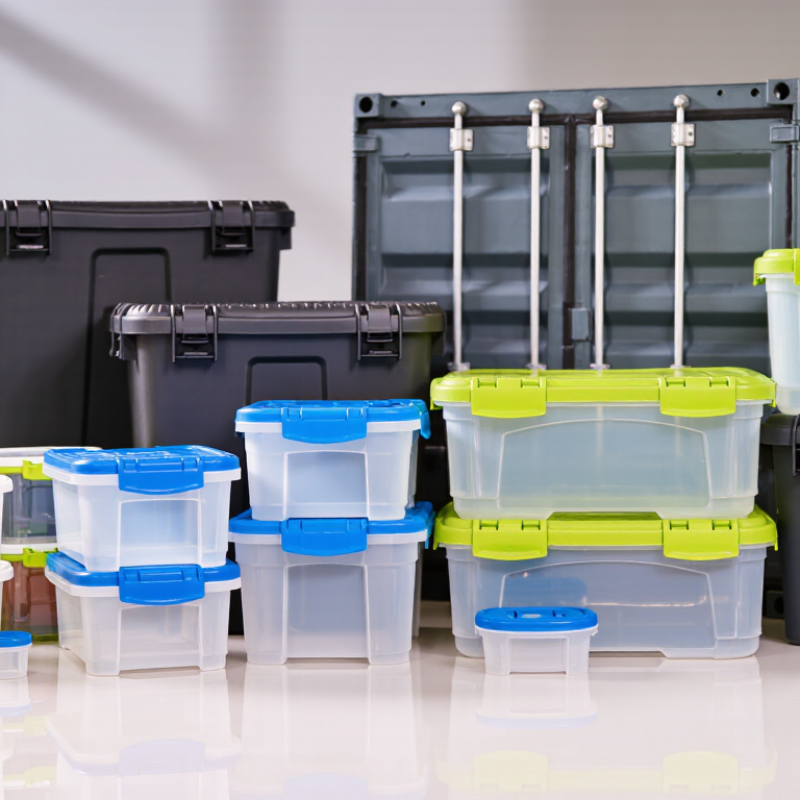
Storage needs differ, so one container type cannot serve every buyer. For household organization, stackable plastic bins work well for clothing, toys, and seasonal decorations. Clear walls save time when shelves are crowded. Use locking lids where dust, insects, or humidity may be a concern.
For documents, tools, and small parts, compartment boxes provide better control than deep containers. Choose adjustable dividers for changing inventories. Heavy-duty crates suit warehouses, workshops, and repeated transport because reinforced corners reduce damage during handling. Ventilated containers help air circulate around produce or damp equipment, but they are unsuitable for items needing complete moisture protection. A sealed container with a gasket is more appropriate for sensitive electronics and important papers.
Cold-storage users should check whether the container remains flexible at low temperatures. Food-contact applications require materials and testing appropriate for that use. Check internal dimensions, load capacity, lid fit, nesting design, and pallet compatibility before purchasing large quantities. Measurements on a product sheet can feel clear, yet usable space may shrink because of thick walls or rounded corners.
A common mistake is choosing the largest box available. It often becomes heavy, unstable, and difficult to move. I once underestimated lid strength during repeated stacking; the container survived, but the lid warped. Small trial orders, handling checks, and written inspection records make global purchasing more reliable. Always confirm labeling, packaging, and destination-market requirements with qualified local professionals.
Choosing storage containers for global buyers requires more than comparing price and appearance. Material affects weight, impact resistance, moisture control, and recycling options. Plastic is light and practical, while stainless steel handles heat and repeated washing better. Glass resists odors, but shipping weight and breakage increase costs.
Size should match the actual supply chain. A 10-liter container may suit warehouse storage, but it wastes space in small retail cartons. Measure internal volume, external dimensions, lid clearance, and pallet fit. Leave room for handling. Features also deserve testing. Check gasket compression, stack strength, label adhesion, and whether the lid opens with gloves. Standards such as ASTM D4169 can guide distribution testing for vibration, shock, and compression.
Durability is not only about thick walls. UV exposure, temperature changes, chemicals, and repeated impact can cause early failure. Smithers’ packaging outlook reports continue to emphasize barrier performance and sustainability as major purchasing factors. My own comparison exposed a flaw: I overvalued rigid construction and ignored hinge fatigue. A lighter container with replaceable parts may perform better over time. Not always. Request test records, inspect sample units, and compare failure rates rather than relying on advertised lifespan.
Choosing among 40 storage container types is easier when the order matches your real operating conditions. A buyer should measure shelves, doors, pallets, and loading equipment before comparing prices. A container that fits a warehouse may fail inside a delivery van.
Check the material specification carefully. Ask whether it is food-contact suitable, recyclable, UV-resistant, or designed for cold storage. Request wall thickness, load capacity, temperature range, and dimensional tolerances in writing. Photos can hide thin corners and uneven lids. A physical sample reveals more.
Do not ignore closure performance. Test a filled container by lifting, stacking, and opening it repeatedly. I once trusted a supplier’s stated capacity, but the lid warped under uneven stacking. That mistake delayed packing for several days. The specification was technically correct, yet it did not reflect our handling routine.
Global orders also need clear export packing details. Confirm carton quantity, gross weight, pallet dimensions, labeling, spare parts, and inspection procedures. Ask for production samples before full manufacturing. Check payment terms, lead time, shipping responsibilities, and documentation with qualified professionals when needed. Keep written records of every change.
Small details matter. A two-millimeter size difference can disrupt automated storage. Weak cartons can arrive crushed after humid ocean transport. Buyers should compare total landed cost, not only unit price, while allowing room for imperfect forecasts and seasonal demand.
| No. | Container Type | Nominal Capacity | Approx. External Dimensions | Typical Material | Closure / Access | Typical Temperature Range | Stacking Characteristics | Recommended Applications |
|---|---|---|---|---|---|---|---|---|
| 1 | Small Euro-style plastic tote | 12 L | 400 × 300 × 120 mm | Food-grade polypropylene | Open top; optional fitted lid | -20°C to 80°C | Nested when empty; stackable with lid | Small parts, laboratory items, retail backroom storage |
| 2 | Medium Euro-style plastic tote | 25 L | 400 × 300 × 235 mm | Polypropylene | Hinged or removable lid | -20°C to 80°C | Stable footprint for pallet storage | Hardware, components, warehouse picking |
| 3 | Large Euro-style plastic tote | 43 L | 600 × 400 × 235 mm | Impact-resistant polypropylene | Attached or separate lid | -20°C to 80°C | Designed for repeated stacking | Industrial parts, distribution centers, order fulfillment |
| 4 | Heavy-duty attached-lid container | 32 L | 600 × 400 × 185 mm | Recycled or virgin HDPE | Attached hinged lid with snap closure | -20°C to 60°C | Securely stackable when closed | Returnable transport packaging and export logistics |
| 5 | Heavy-duty attached-lid container | 64 L | 600 × 400 × 335 mm | High-density polyethylene | Attached lid; tamper-evident options available | -20°C to 60°C | Reinforced corners for stacking | Automotive parts, service operations, closed-loop shipping |
| 6 | Collapsible bulk container | 250 L | 1,200 × 800 × 560 mm | HDPE or polypropylene | Open top; optional lid or cover | -20°C to 60°C | Foldable walls; stackable when erected | Large components, agricultural produce, industrial handling |
| 7 | Large rigid bulk bin | 500 L | 1,200 × 1,000 × 760 mm | Structural HDPE | Open top; optional cover | -20°C to 60°C | Four-way forklift access; stackable with compatible design | Manufacturing materials and bulk warehouse storage |
| 8 | Plastic pallet box | 610 L | 1,200 × 1,000 × 790 mm | HDPE | Open or attached hinged lid | -20°C to 60°C | Designed for pallet racking and stacking | Food processing, logistics, industrial bulk goods |
| 9 | Ventilated produce crate | 40 L | 600 × 400 × 220 mm | Food-contact polypropylene | Open top with perforated walls | -20°C to 60°C | Ventilated nesting and stacking | Fruit, vegetables, seafood, bakery distribution |
| 10 | Small nesting crate | 15 L | 400 × 300 × 145 mm | Polypropylene | Open top | -20°C to 80°C | Nests to reduce return freight volume | Retail transport, food handling, picking operations |
| 11 | Clear modular storage box | 5 L | 300 × 200 × 120 mm | Transparent polypropylene | Clip-on lid | 0°C to 60°C | Light-duty stacking | Office supplies, craft goods, small inventory |
| 12 | Clear modular storage box | 15 L | 400 × 300 × 180 mm | Transparent polypropylene | Clip-on lid with label area | 0°C to 60°C | Stackable with matching sizes | Household goods, spare parts, e-commerce fulfillment |
| 13 | Clear modular storage box | 35 L | 600 × 400 × 230 mm | Transparent polypropylene | Clip-on lid | 0°C to 60°C | Moderate-duty stacking | Garments, packaging materials, warehouse organization |
| 14 | Under-bed storage container | 45 L | 800 × 400 × 180 mm | Polypropylene | Low-profile hinged or removable lid | 0°C to 50°C | Not intended for high-load stacking | Seasonal clothing, linens, documents |
| 15 | Document archive box | 35 L | 520 × 350 × 250 mm | Polypropylene or corrugated plastic | Locking lid with document label area | 0°C to 50°C | Stackable for light office loads | Paper records, files, manuals, archives |
| 16 | Waterproof equipment case | 20 L | 550 × 350 × 220 mm | Impact-resistant polypropylene | Gasketed lid with latches | -20°C to 60°C | Stackable; reinforced corners | Tools, instruments, field equipment |
| 17 | Waterproof equipment case | 55 L | 700 × 450 × 300 mm | Impact-resistant copolymer | Gasketed lid; pressure equalization valve | -20°C to 60°C | Stackable with anti-slip feet | Industrial equipment, cameras, sensitive instruments |
| 18 | Insulated shipping box | 20 L | 500 × 350 × 300 mm | EPS or EPP insulation with corrugated outer shell | Fitted lid and tape closure | Commonly used at 2°C to 8°C with coolant packs | Limited stacking; protect from compression | Pharmaceutical samples, chilled food, laboratory shipments |
| 19 | Insulated shipping box | 45 L | 700 × 450 × 350 mm | EPP or polyurethane insulation | Fitted insulated lid | Temperature depends on coolant configuration | Moderate stacking with load-rated outer packaging | Cold-chain distribution and temperature-sensitive goods |
| 20 | Foldable fabric storage cube | 30 L | 330 × 330 × 330 mm | Polyester fabric over fiberboard or plastic panels | Open top or front pull handle | 5°C to 40°C | Light-duty stacking only | Clothing, toys, household organization |
| 21 | Heavy-duty woven storage bag | 90 L | 600 × 400 × 380 mm | Woven polypropylene | Zipper or drawstring closure | 5°C to 50°C | Flexible; do not exceed rated compression load | Textiles, packaging waste, seasonal goods |
| 22 | FIBC bulk bag | 1,000 L | 900 × 900 × 1,100 mm | Woven polypropylene fabric | Top filling spout; bottom discharge spout | -20°C to 60°C, depending on fabric | Only stack according to certified load rating | Powders, granules, minerals, agricultural products |
| 23 | Food-grade ingredient bin | 60 L | 600 × 400 × 420 mm | Food-contact HDPE | Tight-fitting hinged lid | -20°C to 60°C | Stackable when fully closed | Dry ingredients, food production, catering supplies |
| 24 | Mobile ingredient bin | 100 L | 700 × 450 × 650 mm | Food-contact polypropylene | Removable lid; caster base | -20°C to 60°C | Usually non-stackable when mounted on casters | Commercial kitchens, bakeries, food factories |
| 25 | Drum with screw lid | 30 L | 330 mm diameter × 470 mm height | HDPE | Screw lid with gasket | -20°C to 60°C | Stackable when designed with locating rings | Liquids, powders, chemicals, sampling materials |
| 26 | Open-head plastic drum | 60 L | 400 mm diameter × 650 mm height | HDPE | Removable lid with clamp ring | -20°C to 60°C | Stackable with compatible pallets or rings | Industrial materials, food ingredients, waste collection |
| 27 | Closed-head plastic drum | 220 L | 585 mm diameter × 930 mm height | High-density polyethylene | Two threaded openings with plugs | -20°C to 60°C | Vertical stacking requires load-rated design | Liquids, chemicals, detergents, food-grade liquids |
| 28 | Steel drum | 210 L | 585 mm diameter × 890 mm height | Carbon steel with protective coating | Open-head or closed-head configuration | -20°C to 80°C, subject to contents | Suitable for vertical stacking with approved rings | Oils, chemicals, industrial liquids and solids |
| 29 | Intermediate bulk container | 1,000 L | 1,200 × 1,000 × 1,160 mm | HDPE bottle in galvanized steel cage | Top fill opening; bottom valve | Typically 0°C to 60°C | Designed for one-high or approved multi-level stacking | Liquids, food ingredients, chemicals, industrial fluids |
| 30 | Reusable liquid transport tank | 500 L | 1,000 × 800 × 950 mm | HDPE tank with metal frame | Top opening and bottom discharge valve | Typically 0°C to 60°C | Forkliftable; stacking depends on certification | Water, food liquids, detergents and process fluids |
| 31 | Metal parts bin | 10 L | 350 × 200 × 150 mm | Powder-coated steel | Open front or label holder | -20°C to 80°C | Front-access stacking or rack mounting | Fasteners, tools, machine components |
| 32 | Steel wire mesh container | 300 L | 1,200 × 800 × 970 mm | Welded steel wire with painted or galvanized finish | Half-drop gate or removable side | -20°C to 80°C | Collapsible or stackable depending on frame type | Automotive components, metal parts, industrial goods |
| 33 | Stainless steel sanitary bin | 50 L | 500 × 400 × 400 mm | 304 stainless steel | Removable hygienic lid | -20°C to 120°C | Limited stacking; use compatible base design | Pharmaceutical, dairy, food and cleanroom environments |
| 34 | Stackable cardboard archive carton | 40 L | 520 × 350 × 220 mm | Double-wall corrugated fiberboard | Full-overlap folding lid | Keep dry; generally 5°C to 35°C | Stackable only within rated compression load | Documents, printed materials, lightweight inventory |
| 35 | Export plywood crate | 250 L | 1,000 × 600 × 420 mm | Heat-treated plywood and timber framing | Screwed or nailed removable panels | Suitable for normal ambient shipping conditions | Reinforced for transport stacking | Machinery parts, industrial equipment, export cargo |
| 36 | Reusable plastic pallet box with lid | 400 L | 1,200 × 800 × 580 mm | Recycled or virgin HDPE | Attached or removable lid | -20°C to 60°C | Four-way forklift entry; stable stacking | Returnable packaging, food logistics, manufacturing |
| 37 | Foldable plastic pallet box | 600 L | 1,200 × 1,000 × 970 mm | HDPE panels with reinforced base | Open top or fitted cover | -20°C to 60°C | Collapses for reverse logistics; stackable when erected | Automotive supply chains, agriculture, distribution |
| 38 | UN-rated plastic drum | 60 L | 400 mm diameter × 650 mm height | Certified HDPE | Approved screw or clamp closure | Varies by chemical and packaging approval | Stacking must follow certification and handling instructions | Regulated liquids and solids for international transport |
| 39 | UN-rated steel drum | 200 L | 590 mm diameter × 850 mm height | Carbon steel with internal or external coating | Certified open-head or closed-head closure | Depends on contents and dangerous-goods approval | Use only within marked stacking limits | Hazardous chemicals, oils, paints and industrial materials |
| 40 | Temperature-controlled reusable container | 100 L | 800 × 600 × 700 mm | Insulated polypropylene or molded composite | Insulated hinged lid with gasket | Commonly configured for chilled or frozen distribution | Stackable when the base and lid are load-rated | Pharmaceuticals, clinical samples, fresh food and seafood |

40 Best Storage Containers for Global Buyers?
Choosing the best storage container for your market requires more than comparing prices. In sourcing work, I have seen attractive containers fail because their lids warped during humid shipping. A strong sample is not enough. Test it in realistic conditions.
Measure cabinet depth, shelf height, and common household spaces before selecting a size. A 1.5-liter container may suit urban kitchens, while larger bins fit garages or small warehouses. Check wall thickness, hinge strength, lid seals, and stacking stability. Use food-contact materials only when the product is intended for food storage. Ask suppliers for material specifications and safety test reports.
Think about local habits. Some markets prefer transparent bodies, while others value colorful containers for children’s rooms. Cold regions need plastic that stays flexible. Hot regions need resistance to sunlight and heat. Shipping efficiency matters too. Nested containers can reduce carton volume and freight costs. However, nesting may create tight lids that frustrate users. Test both packed and unpacked units.
Do not ignore after-sales feedback. A container that looks premium may still scratch easily or retain odors. Review sample defects, return reasons, and retailer comments before ordering. Requirements can differ by country, especially for food contact, labeling, and recycling information. Confirm current local rules with qualified compliance professionals. I still allow extra time for testing because early assumptions are often wrong.
Approximate internal volume is a practical starting point when selecting a storage container for different markets. Larger high-cube formats provide more usable vertical space, while standard formats may be easier to source and transport.
Data shown in cubic metres. Values represent typical internal volumes for common ISO dry-container formats; exact capacity varies by manufacturer, door configuration, flooring and insulation.
CUSTOMER ALERT Beware of fraudulent websites using our name. We do not sell on Craigslist or Facebook Marketplace. Report suspicious contacts to 713-670-8801.