CUSTOMER ALERT Beware of fraudulent websites using our name. We do not sell on Craigslist or Facebook Marketplace. Report suspicious contacts to 713-670-8801.


Why Choose an Open Side Shipping Container?
Why Choose an Open Side Shipping Container?
An open side shipping container changes how cargo enters, leaves, and gets inspected. Its full-length side doors create a wider working opening than standard container doors. That difference matters when handling long materials, bulky machinery, pallets, retail fixtures, or construction supplies.
“Access often determines practical value,” says Lars Jensen, a container logistics analyst. His observation reflects a common operational reality. A forklift can approach from the side. Workers can view more cargo without unloading everything. This can reduce handling time and simplify stock checks.
The benefits become clearer in crowded yards. A side opening may help when the rear doors face a wall, truck, or another container. It can also support temporary workshops, event storage, and controlled distribution areas. However, an open side shipping container is not automatically the best choice.
Side doors add hardware, seals, and maintenance points. They may require careful locking and weather checks. Uneven ground can affect door operation. Some users also underestimate the space needed to open the full side panel. That mistake can make the container less practical.
Cargo weight and loading methods still require professional planning. A qualified supplier should confirm dimensions, door configuration, flooring strength, ventilation, and delivery access. Local transport and placement requirements should also be checked.
This guide examines where side access creates real value. It also considers cost, security, weather protection, and daily usability. The choice can be highly effective. Sometimes, a standard container remains simpler and more economical.
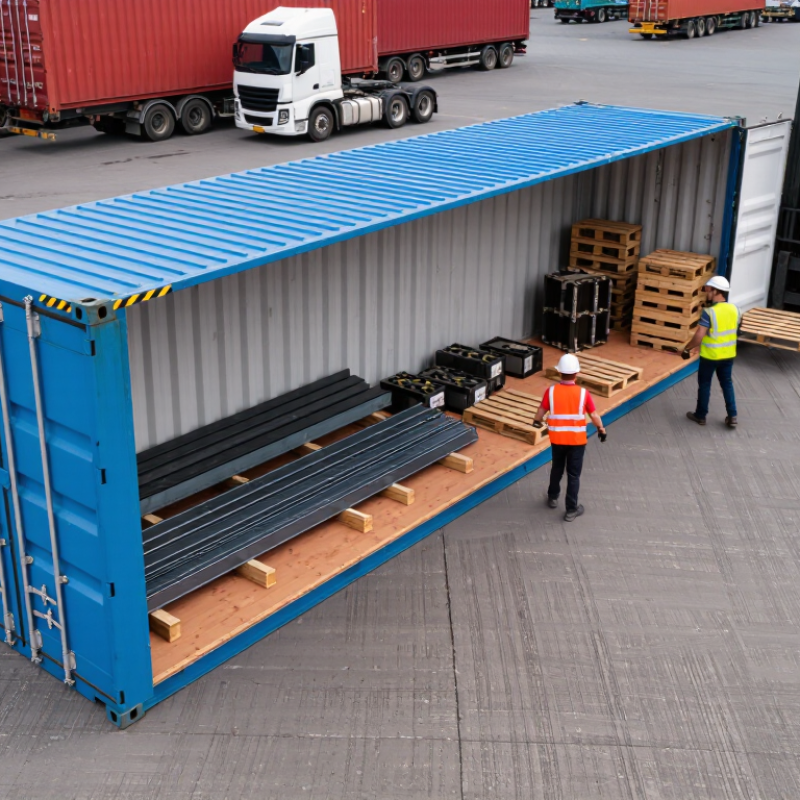
Table of Contents
[Hide]
What Is an Open Side Shipping Container?
Why Choose an Open Side Shipping Container?
What Is an Open Side Shipping Container?
An open side shipping container is an ISO freight container with doors along its long wall. Standard containers usually open from one end. This version exposes nearly the full side, making loading wider or bulky cargo much easier. Forklifts can approach from the side, while workers can inspect items without climbing inside. It is useful for machinery, construction materials, event equipment, and palletized goods.
The container still follows familiar structural principles. ISO 668 defines standard container dimensions and performance categories. The International Convention for Safe Containers requires inspection and certification before international transport. These standards matter because side doors add moving parts and potential weak points. Door alignment, seals, hinges, and locking bars need regular checks. Small faults become serious in harsh weather.
The scale of container shipping explains its importance. UNCTAD’s Review of Maritime Transport reports that more than 80% of global merchandise trade by volume moves by sea. Efficient access can reduce handling time and avoid repeated lifting. That sounds simple. It is not always.
A side-opening unit may cost more and lose some internal wall strength. Cargo planning also matters, especially when doors must remain accessible. A site test with the actual forklift is wise. The best choice depends on access, load shape, weather exposure, and inspection discipline. Sometimes, a standard container is still the better answer.
| Data Dimension | Typical Information | Why It Matters |
|---|---|---|
| Definition | An open side shipping container is an ISO-style freight container with cargo doors running along most or all of one long side, in addition to standard end doors. | It provides side access for loading, unloading, displaying, or positioning cargo that is difficult to handle through a single end opening. |
| Common Lengths | 20 ft and 40 ft are the most common nominal lengths. | The 20 ft format is suitable for smaller loads, while the 40 ft format offers approximately twice the floor length for larger or longer cargo. |
| External Dimensions | Typical ISO dimensions are approximately 6.06 m long × 2.44 m wide × 2.59 m high for a 20 ft unit, and 12.19 m long × 2.44 m wide × 2.59 m high for a 40 ft unit. | These standardized dimensions allow the container to be transported by container ships, rail systems, and compatible road trailers. |
| Internal Dimensions | A typical 20 ft container has an internal length of about 5.90 m; a typical 40 ft container has an internal length of about 12.03 m. Internal width is generally about 2.35 m and internal height about 2.39 m. | Actual usable space is reduced by door frames, wall construction, floor thickness, and the side-opening mechanism. |
| Side Opening | The side opening is commonly about 5.5–5.9 m wide on a 20 ft unit and about 11.5–11.9 m wide on a 40 ft unit. The exact opening depends on the door design and frame structure. | A wide side opening enables forklift, pallet, crane, and manual access from the side instead of requiring all cargo to pass through the end doors. |
| Side Door Configuration | Side access may use several hinged panels, bi-fold doors, or multi-panel doors. Some models open a large section of the long wall rather than the entire side. | More panels can improve access but may add structural components, weight, and maintenance requirements. |
| Door Clearance | Typical end-door clearances are approximately 2.34 m wide × 2.28 m high, while side-door clearance varies by the container design. | Confirm the actual clear opening before ordering, especially when loading wide machinery, assembled equipment, or oversized pallets. |
| Typical Maximum Gross Mass | Many standard ISO containers are designed around a maximum gross mass of approximately 30,480 kg, although the rating must be verified on the individual container safety plate. | Maximum cargo capacity is calculated by subtracting the container tare weight from its permitted gross mass and may also be limited by local transport regulations. |
| Typical Tare Weight | Open side units are generally heavier than comparable end-door dry containers because of their reinforced side frames and additional door hardware. Exact tare weight varies by construction. | The heavier structure can reduce available payload, so the tare weight should be checked before planning heavy cargo shipments. |
| Loading Efficiency | Side access allows cargo to be loaded from multiple points and can reduce the need to move previously loaded items. | This is useful for mixed loads, staged deliveries, long items, and cargo that must be accessed during unloading. |
| Suitable Cargo | Common applications include machinery, building materials, pipes, timber, large pallets, retail displays, agricultural equipment, and event structures. | The container is particularly practical when cargo is wide, long, heavy, or not easily maneuvered through conventional end doors. |
| Weather Protection | When fully closed and properly secured, the container offers protection from rain, wind, dust, and general outdoor exposure. Door seals and locking points require regular inspection. | Correctly maintained seals help protect cargo during storage and transportation, but the unit should not be treated as permanently waterproof without inspection. |
| Accessibility | End doors and long-side doors can be used independently, allowing access to different cargo zones. | Separate access points can improve stock rotation, simplify inspections, and support partial unloading without disturbing the entire load. |
| Space Planning | Side-door hardware and reinforced frames may slightly reduce usable clearance near the opening compared with a conventional dry container. | Allow clearance for door operation, forklift turning, cargo restraints, and safe personnel movement when preparing the loading plan. |
| Site Requirements | The side-opening face requires sufficient lateral clearance for door movement, loading equipment, and personnel. | Before delivery, confirm ground stability, access-road width, overhead clearance, and available working space on the opening side. |
| Key Advantages | Wide side access, flexible loading options, improved visibility, easier handling of oversized cargo, and more convenient multi-point access. | These benefits can reduce handling time and improve operational flexibility compared with containers that have end doors only. |
| Potential Limitations | Higher purchase or rental cost, greater tare weight, more seals and hinges to maintain, and possible reduction in payload or internal clearance. | A conventional dry container may be more economical when cargo can be loaded efficiently through the end doors. |
| Inspection Checklist | Check the floor, roof, corner posts, side-door alignment, hinges, locking bars, gaskets, welds, corrosion, and safety markings. | A detailed inspection helps identify water ingress, structural damage, unsafe doors, and reduced load-carrying capability before use. |
| Best Selection Criteria | Choose an open side container when side loading, frequent access, wide cargo, or staged unloading is more important than the lowest tare weight and purchase cost. | The correct choice depends on cargo dimensions, loading equipment, transport route, payload requirements, and the available operating space. |
| Specification Note | Dimensions, door clearances, tare weights, maximum gross mass, and side-opening arrangements vary by container design, age, and certification. Always verify the manufacturer’s or owner’s data plate and technical drawings for the specific unit. | Using unit-specific specifications reduces the risk of loading errors, transport non-compliance, and unsuitable site preparation. |
Related Posts
-
China Top 10x10 Shipping Container for Global Buyers?
-
Top 10 Benefits of Using Wide Shipping Containers for Your Business
-
The Ultimate Guide to Choosing Large Shipping Containers for Your Needs in 2025
-
Top 10 Houston Container Suppliers for Global Sourcing Needs?
-
2026 Best 20 Foot Storage Container for Global Buyers Guide?
-
2026 Top Conex Container Types for Global Buyers?