CUSTOMER ALERT Beware of fraudulent websites using our name. We do not sell on Craigslist or Facebook Marketplace. Report suspicious contacts to 713-670-8801.

Global buyers entering the 2026 container market need more than a low quoted price. They need the right conex container for cargo, climate, handling equipment, and delivery routes. A dry van may suit boxed goods, while a high-cube unit offers extra vertical capacity for lightweight products. Refrigerated containers support temperature-sensitive shipments, but they require reliable power and careful monitoring.
Details matter. Door seals, floor condition, corner castings, ventilation, and previous repair work can change the real value of a unit. In practical purchasing, a container that looks clean outside may still show corrosion beneath the floor or around the roof seams. Buyers should request inspection photographs, verified dimensions, payload data, and service records. Independent inspection remains valuable, especially when purchasing remotely.
This guide examines the leading conex container types expected to attract global buyers in 2026. It considers availability, operating costs, cargo protection, customization, and resale potential. It also highlights common trade-offs instead of presenting one universal solution. No single type wins every route. That assumption can fail.
Reliable decisions should reference recognized specifications, container condition reports, and applicable transport requirements. Buyers should confirm markings, structural integrity, and certification status with qualified suppliers or inspectors. Regional availability may affect prices more than advertised features. Weather, port handling, inland access, and storage duration also deserve attention. A well-matched container can reduce delays and cargo risk, but only when its limits are understood. This overview offers a practical starting point for comparing options with greater confidence.
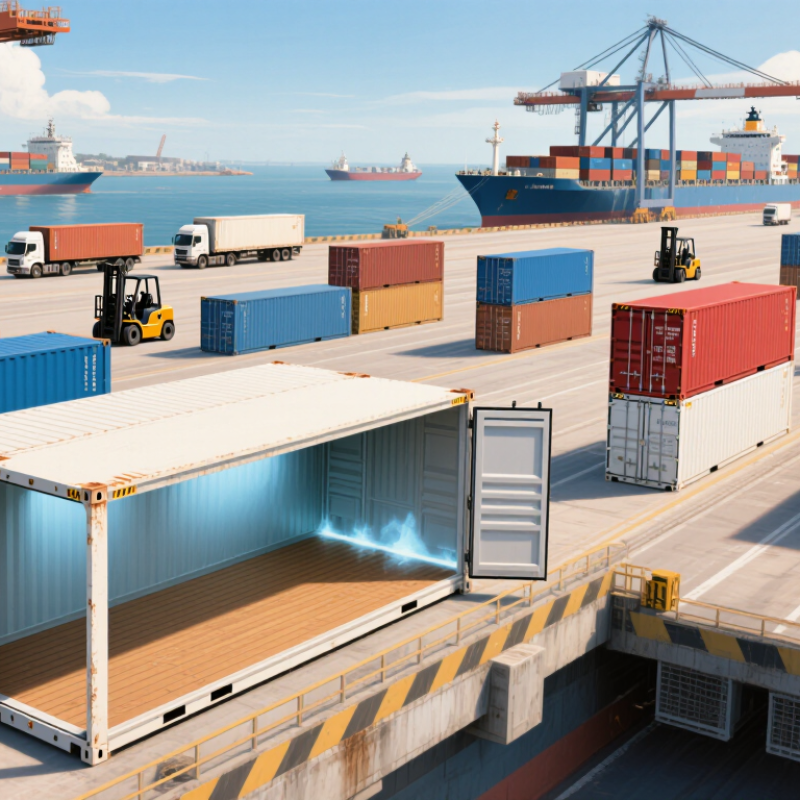
In 2026, 20-foot dry Conex containers remain practical for global buyers needing compact, standardized freight space. Built around ISO 668 dimensions, they typically measure 6.058 meters long, 2.438 meters wide, and 2.591 meters high externally. Their internal capacity is about 33 m³, although actual space varies by wall thickness, flooring, and door design.
A typical unit provides roughly 5.9 meters of internal length and about 2.35 meters of usable width. This suits boxed machinery, packaged materials, furniture, and palletized cargo. Measure every load before ordering. A few centimeters can decide whether cargo fits safely. Door openings also reduce practical loading space.
From inspection experience, buyers should check floor condition, door seals, corner posts, and visible corrosion. A clean exterior does not prove structural quality. Ask for recent inspection records and clear internal photographs. Payload ratings require separate review because container tare weight, cargo distribution, and handling equipment affect safe use. The 33 m³ figure is useful for planning, but it should not become a rigid promise. Internal fittings, repairs, and uneven packing may reduce usable volume. Sometimes, a smaller measured load performs better than a crowded one.
For global buyers planning 2026 shipments, the 40-foot dry Conex container remains a practical general-cargo option. Its internal capacity is about 67 m³, depending on construction and measurement methods. Typical internal dimensions are close to 12.03 metres long, 2.35 metres wide, and 2.39 metres high. This space suits boxed machinery, furniture, packaged materials, and palletized inventory. Check the actual specification sheet.
The rated payload may exceed 26 tonnes, but road limits, axle rules, and handling equipment can reduce usable weight. Cargo should be distributed evenly across the floor. Heavy cases belong low and near the centerline. Leave room for doors, lashing, and safe inspection. Moisture-sensitive goods need dry packaging, desiccants, and suitable ventilation decisions. Small errors matter. A few unplanned centimetres can block the doors.
Before purchase or lease, inspect corner posts, floorboards, door seals, locking bars, and roof condition. Request recent photos, internal dimensions, tare weight, payload, and inspection records. Confirm that the unit is suitable for international transport and has valid safety approval where required. Used containers may show dents or repaired floors, but these are not automatically failures. A weak seal or contaminated floor deserves rejection. The 67 m³ figure is useful, not absolute. Real loading efficiency may fall to 85–90 percent after voids and securing space. Loading plans can look perfect on paper and fail at the doors. A trial loading diagram is often worth the extra hour.
| Data Dimension | Typical Specification or Value | Buyer-Relevant Details |
|---|---|---|
| Container Type | 40-foot standard dry freight container | Enclosed, weather-resistant cargo unit designed for general, non-temperature-controlled freight. |
| Nominal External Size | 40 ft long × 8 ft wide × 8 ft 6 in high | Metric equivalent: approximately 12.19 m × 2.44 m × 2.59 m. |
| Typical Internal Length | Approximately 12.03 m | Actual dimensions may vary slightly by container design and manufacturing tolerance. |
| Typical Internal Width | Approximately 2.35 m | Suitable for palletized or boxed cargo, subject to the cargo’s footprint and loading plan. |
| Typical Internal Height | Approximately 2.39 m | Provides standard vertical clearance for general cargo; verify door and interior clearances before purchase. |
| Internal Volume | Approximately 67.0–67.7 m³ | The commonly quoted 67 m³ capacity is a nominal usable volume; the exact figure depends on the container specification. |
| Door Opening | Approximately 2.34 m wide × 2.28 m high | Measure oversized cartons, machinery, and crated goods against the door opening rather than the internal dimensions. |
| Maximum Gross Mass | Commonly up to 30,480 kg | Maximum gross mass includes both the container tare mass and the cargo; local road and rail limits may be lower. |
| Typical Tare Mass | Approximately 3,700–4,000 kg | Exact tare mass is shown on the container’s safety approval plate and identification markings. |
| Typical Payload Range | Approximately 26,500–28,000 kg | Payload is calculated from the certified gross mass minus the actual tare mass and must comply with transport regulations. |
| Floor Area | Approximately 28.3 m² | Useful for estimating pallet layouts, cartons, drums, furniture, and other floor-loaded cargo. |
| Pallet Capacity | About 20 standard Euro pallets or up to 21 in some optimized layouts | Actual capacity depends on pallet orientation, load overhang, packaging, and access requirements. |
| Typical Cargo Uses | Machinery, furniture, packaged goods, textiles, spare parts, and dry food products | Suitable when cargo does not require active temperature control, ventilation, or special hazardous-cargo equipment. |
| Cargo Protection | Steel exterior, sealed doors, and plywood or similar flooring | Provides protection from normal handling and weather exposure; it is not a substitute for moisture barriers or cargo-specific packing. |
| Loading Method | Rear-door loading with forklifts, pallet jacks, or manual loading | A loading ramp, suitable forklift capacity, and proper weight distribution may be required for efficient handling. |
| CSC Compliance | Required for international sea transport | Confirm that the container has a valid safety approval plate and inspection status before export shipment. |
| Cargo Weight Distribution | Load evenly across the floor and keep the center of gravity low | Uneven loading can affect handling, structural safety, axle weights, and compliance with carrier requirements. |
| Common Limitations | Not insulated, refrigerated, open-top, or side-opening by default | Temperature-sensitive, exceptionally tall, top-loaded, or oversized cargo may require a specialized container type. |
| Best Buying Checklist | Verify dimensions, tare mass, gross mass, floor condition, door seals, corrosion, and certification | Request current photos, inspection records, identification details, and transport-route weight requirements before final purchase. |
For global buyers in 2026, the 40-foot high-cube Conex container remains a practical volume choice. Its nominal internal capacity is about 76 m³, based on common dimensions near 12.03 × 2.35 × 2.69 metres. The high-cube version adds roughly 30 cm of interior height over a standard 40-foot unit. That difference can accommodate taller cartons, light machinery, and stacked retail fixtures. Small gain. Large handling effect.
UNCTAD’s Review of Maritime Transport 2024 recorded approximately 858.5 million TEUs in global container-port throughput during 2023. That scale supports demand for flexible equipment, but it does not guarantee equal availability at every origin. Drewry’s Container Forecaster 2024 also highlights equipment imbalance and repositioning as recurring cost pressures. Buyers should verify CSC safety approval, door clearances, floor condition, tare weight, and available payload before booking. Dimensions alone are not enough.
Volume is not the same as usable volume. Insulation, lashing space, pallets, and uneven loading reduce the practical figure. A 76 m³ estimate can therefore mislead a procurement spreadsheet. High-cube units also raise the center of gravity when cargo is loaded heavily above mid-height. That can complicate forklift access, road clearance, and warehouse doors. Site measurements matter. One weakness in many buying guides is treating dimensions as universal. Manufacturing tolerances, repairs, flooring, and chassis limits create variation. Use the 30 cm as planning headroom, not a promise of 30 cm of extra cargo.
Typical internal volume and height of widely used ISO container formats
The 40-foot high-cube container provides approximately 76.4 m³ of internal capacity and about 30 cm more internal height than a typical 40-foot standard container. Dimensions and capacity can vary slightly by container specification and manufacturing tolerances.
Among the 2026 Conex container types, the 45-foot high-cube model suits buyers needing extra cubic capacity. Its internal volume is typically about 86 m³, based on common ISO dimensions. The extra height provides roughly 30 centimeters more space than a standard container. That helps with cartons, furniture, machinery parts, and other lightweight cargo. It is not a magic box.
ISO 668 dimensions support consistent handling across ships, rail networks, and road chassis. UNCTAD’s Review of Maritime Transport 2024 recorded about 858 million TEU in global container port throughput during 2023. The figure shows the scale of intermodal logistics. However, capacity alone does not guarantee smooth delivery. The World Bank–S&P Global Container Port Performance Index 2023 assessed 405 ports, highlighting major differences in port efficiency. Buyers should verify terminal acceptance and inland equipment before ordering.
Check axle limits, door clearances, floor loading, tare weight, and pallet layout. One detail is often missed: a 45-foot unit may not fit every chassis or depot. Its usable capacity also falls when cargo requires strong blocking and bracing.
An 86 m³ estimate can become much less in practice. Payload limits matter too, especially when dense goods fill only part of the floor. Experienced buyers compare measured cargo plans with local route restrictions, not volume claims alone.
Reefers, open-tops, flat-racks, and tanks serve cargo that standard dry boxes cannot handle. UNCTAD’s Review of Maritime Transport 2024 reported continued growth in seaborne trade, increasing pressure on specialized equipment. Reefers protect seafood, pharmaceuticals, and fresh produce with controlled temperatures. A single warm pallet can damage an entire load. Open-tops suit timber, machinery, and stone that exceed door height. Flat-racks handle heavy or awkward cargo, but lashing points and weight distribution require careful planning.
Tank containers support liquid food, chemical, and industrial shipments under ISO specifications. The ITCO Global Tank Container Fleet Survey 2024 recorded more than 800,000 tank containers worldwide. That figure shows strong demand, but availability still varies by route. Drewry’s Container Census also tracks a global container fleet above 50 million TEU, although specialized units represent only a small share. This imbalance can create higher repositioning costs and longer booking windows. The practical lesson is uncomfortable: the cheapest equipment is not always the most suitable.
Tips: Confirm cargo dimensions, temperature range, payload, and discharge method before booking. Request recent inspection records for tanks and reefers. For flat-racks, provide loading drawings and verified weights. Open-tops may need weather protection, but tarpaulins cannot replace correct securing. Check local port limits too. Specifications look precise. Operations are less predictable.
CUSTOMER ALERT Beware of fraudulent websites using our name. We do not sell on Craigslist or Facebook Marketplace. Report suspicious contacts to 713-670-8801.