2026 Best 8x20 Storage Container for Global Buyers?
Choosing the best 8x20 storage container in 2026 requires more than comparing online prices. Global buyers must examine dimensions, steel condition, delivery routes, flooring, locking systems, and local placement requirements. An 8x20 storage container typically offers practical space for tools, machinery, seasonal stock, or site equipment. Yet advertised capacity can be misleading.
Marc Levinson, economist and author of The Box, wrote, “The container made shipping cheap enough to make globalization possible.” His observation remains relevant for modern buyers. A reliable container connects factories, ports, warehouses, and construction sites with fewer handling risks. However, this does not mean every container performs equally well. A weathered roof, bent door frame, or damp plywood floor can create expensive problems within months.
Look closely.
This guide evaluates leading 8x20 storage container options for international buyers. It considers weather resistance, cargo access, ventilation, security, maintenance needs, and supplier transparency. Buyers should also confirm whether the unit is new, refurbished, or cargo-worthy. Those labels are not interchangeable. Photographs may show clean blue panels, while hidden corrosion appears beneath the frame.
The selection process is not perfect. Regional transport costs, climate, customs procedures, and installation conditions can change the final value. A container suitable for a dry warehouse may struggle beside a humid coastline. Careful measurements matter too, especially when trucks, gates, or forklifts have limited clearance. This comparison aims to provide practical guidance, not an unrealistic universal answer. Reliable purchasing begins with verified specifications, documented inspections, and a clear understanding of the buyer’s actual operating environment.
8x20 Container Fundamentals: ISO 668 Dimensions and 33.2 m³ Capacity
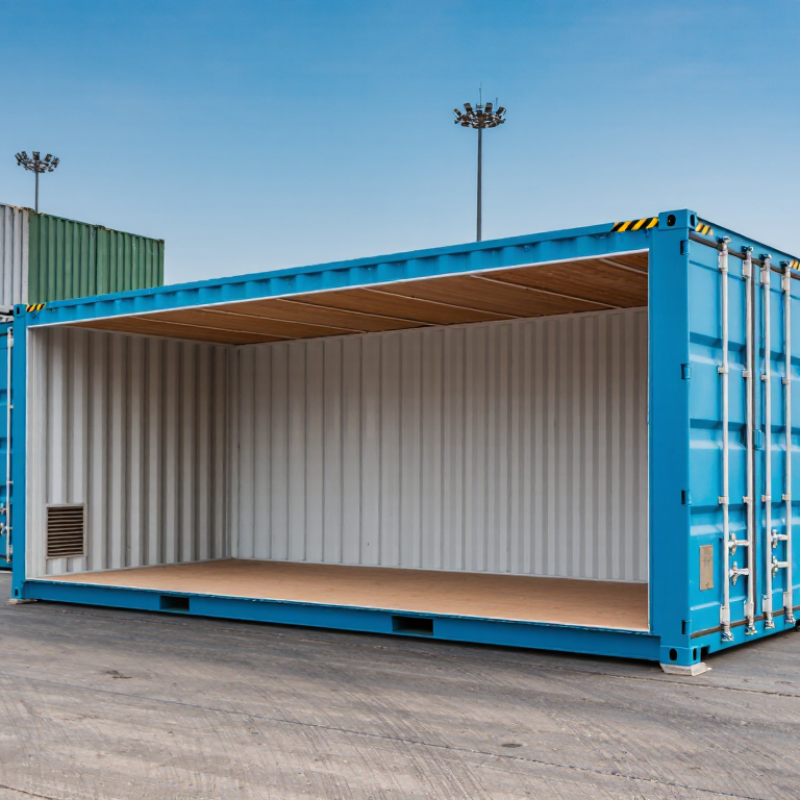
For global buyers in 2026, an 8x20 storage container starts with a precise standard. ISO 668:2020 defines the nominal 20-foot container length as 6.058 metres. Its external width is 2.438 metres. A common external height is 2.591 metres. These figures support consistent stacking, handling, and transport planning across markets.
Inside, a typical 20-foot dry container provides about 33.2 m³ of cubic capacity. The usable interior is usually near 5.90 metres long, 2.35 metres wide, and 2.39 metres high. Wall thickness, door design, flooring, and repairs reduce practical space slightly. The number is useful, but not absolute. Measure the actual unit.
UNCTAD’s Review of Maritime Transport 2023 recorded approximately 858 million TEU in global container port throughput during 2022. The World Bank and S&P Global’s Container Port Performance Index 2023 assessed 405 ports. Those figures show why ISO-compatible dimensions remain important for international supply chains and storage planning. For buyers, the 33.2 m³ figure should be tested against pallet footprints, door clearance, ventilation, and floor loading. A container can look spacious outside. It may feel surprisingly tight inside. Warehousing teams should request verified internal measurements, corner-post condition, and maximum payload before purchase. Practical experience often exposes small assumptions that specification sheets miss.
Structural Standards: ISO 1496 Testing and CSC Safety Compliance
2026 Best 8x20 Storage Container for Global Buyers?
For global buyers, structural compliance matters more than fresh paint. An 8x20 container should be assessed against ISO 1496-1 testing principles. These tests examine lifting points, stacking strength, floor loading, wall resistance, and weather-tightness. The frame must carry forces during handling, not only sit safely on a warehouse yard.
The CSC Safety Approval Plate is essential when the container enters international transport. It records the approval number, maximum gross mass, stacking value, and inspection information. Buyers should compare the plate with the container’s visible condition. Check corner castings, weld seams, doors, roof rails, and floor cross-members. Paperwork is not structure. A damaged corner casting can weaken safe lifting, even when the plate looks valid.
The World Shipping Council’s 2024 Containers Lost at Sea Report recorded 576 containers lost in 2023. That figure represented about 0.0002% of containers transported, yet each failure can create serious operational risk. UNCTAD’s Review of Maritime Transport 2024 also reported container ship capacity growth of roughly 8% during the year. More capacity increases the importance of consistent equipment standards. One limitation remains: an ISO-based test record does not prove current condition. Buyers should request recent inspection evidence, verify load markings, and examine corrosion beneath floor edges. A careful second inspection is sometimes worth more than a low purchase price.
2026 Best 8x20 Storage Container for Global Buyers?
ISO 1496-1 dimensional reference and CSC safety compliance overview
How to read this chart: The external dimensions represent the ISO 20-foot freight-container envelope commonly used for 8x20 storage containers. Internal dimensions are approximate because lining, door construction, flooring, and insulation affect usable space. A common ISO-rated maximum gross mass is 30,480 kg, while tare mass and payload vary by individual container.
Compliance note: ISO 1496-1 addresses freight-container structural and performance requirements, including testing for stacking, lifting, restraint, and floor strength. The CSC requires an approved safety plate, valid examination status, and evidence that the container remains structurally safe for international transport.
Material Selection: Corten Steel, 28,000 kg Payload, and Corrosion Ratings
2026 Best 8x20 Storage Container for Global Buyers?
Corten steel is a practical choice for an 8x20 storage container. Its weathering surface develops a protective oxide layer over time. However, Corten steel is not rust-proof. Constant moisture can damage joints, floors, and lower frame sections. Drainage matters as much as the steel grade.
A 28,000 kg payload sounds strong, but buyers should verify the specification carefully. Payload means usable cargo weight, not always the container’s maximum gross mass. Ask for structural calculations, corner-post ratings, floor capacity, and certification documents. A heavy load can still deform the floor if weight concentrates beneath small equipment feet. I would not rely on a headline figure alone.
Tips:
Check the corrosion rating for the intended climate. ISO 12944 categories can help compare coating performance, such as C3, C4, or C5 environments. Inspect welds, door thresholds, roof seams, and underside coatings. Request salt-spray test results, but do not treat laboratory hours as a complete field guarantee. In coastal areas, choose sealed welds, high-build coating, and sacrificial drainage details. Repainting may still be needed. That part is easy to overlook. Allow ventilation to reduce condensation, especially when temperatures change sharply. A container can look sound outside while hidden moisture weakens internal surfaces.
Climate Performance: Wind, Snow, Seismic Loads, and IP Protection Data
2026 Best 8x20 Storage Container for Global Buyers?
Climate performance should guide every 8x20 storage container purchase.
A strong steel frame alone does not prove safety. Buyers should request tested wind-load data, snow-load capacity, seismic anchoring details, and water-ingress evidence. Wind performance often depends on doors, roof edges, and foundation connections. A container rated for 120 km/h wind may need different anchoring on an exposed coastal site.
Snow loads require local calculations. Wet snow can weigh far more than dry snow. Roof shape, drainage, and support spacing matter. In seismic regions, corner fittings and anchor bolts must transfer movement into the foundation.
I have seen installations fail because the container was strong, but the concrete base was poorly prepared. That mistake deserves more attention.
IP protection also needs careful reading.
An IP rating usually applies to an electrical enclosure, not the complete container. Check door seals, cable entries, ventilation covers, and drainage paths. Condensation can damage stored goods even without visible leaks. Performance claims should include test methods, load units, inspection dates, and installation limits. Generic certificates are not enough.
Tips:
Ask for regional wind and snow calculations. Confirm seismic design with a qualified engineer. Inspect seals after transport. Leave airflow around stored materials. Record roof deflection after the first heavy snowfall. Small details matter.
Global Buyer Scorecard: Delivered Cost, Lifespan, Warranty, and TCO Metrics
For global buyers, an 8x20 storage container should be judged by delivered cost, not factory price. Request one landed-cost sheet covering unit price, ocean freight, destination fees, duties, inland transport, unloading, and site preparation. A crane or reinforced foundation can change the budget quickly. Compare quotes using the same delivery location and currency.
Lifespan depends on steel condition, coating quality, roof drainage, floor treatment, and local climate. Inspect welds, door seals, corner posts, and hidden rust before purchase. In coastal regions, salt exposure may shorten service life without regular maintenance. Ask for inspection photos, material specifications, production dates, and clear grading standards. Small details matter.
Warranty length is only one scorecard item. Check whether coverage includes water entry, structural defects, corrosion, flooring, labor, and transport. Exclusions can be more important than headline promises. Calculate total cost of ownership over ten years: purchase, delivery, foundation, repairs, repainting, security upgrades, and eventual relocation. A low-cost unit may become expensive after two roof repairs. Still, no model predicts every site perfectly. Freight rates shift, weather surprises budgets, and supplier documents may be incomplete. Use a conservative estimate, record assumptions, and leave contingency funds for the gaps.
2026 Best 8x20 Storage Container for Global Buyers? — Global Buyer Scorecard: Delivered Cost, Lifespan, Warranty, and TCO Metrics
| Container Configuration |
Typical Condition and Construction |
Approx. Internal Dimensions |
Delivered Cost
North America |
Delivered Cost
Northern Europe |
Delivered Cost
Southeast Asia |
Expected Remaining Service Life |
Typical Warranty or Guarantee |
Annual Maintenance Budget |
Estimated 10-Year TCO |
Buyer Score
/100 |
Best Use Case |
| New One-Trip Dry Storage |
Factory-new or near-new unit; weather-resistant steel body, marine plywood floor, cargo doors and standard lock rods. |
5.90 m × 2.35 m × 2.39 m
19 ft 4 in × 7 ft 8 in × 7 ft 10 in |
US$4,200–6,800 |
US$4,500–7,200 |
US$4,800–7,800 |
15–25 years with periodic coating and roof maintenance |
Commonly 5 years structural; 1 year workmanship, subject to seller terms |
US$220–400 |
US$6,400–11,000 |
91 |
Best all-round choice for long-term storage, export projects and buyers prioritizing low first-year risk. |
| Cargo-Worthy Used Dry Storage |
Previously used in international transport; structurally sound, wind- and watertight, with inspected doors, corner posts and floor. |
5.90 m × 2.35 m × 2.39 m
19 ft 4 in × 7 ft 8 in × 7 ft 10 in |
US$2,400–4,500 |
US$2,700–4,800 |
US$3,000–5,400 |
8–15 years, depending on corrosion, floor condition and prior service |
Commonly 90 days to 1 year limited condition guarantee |
US$350–650 |
US$5,200–10,800 |
88 |
Best value for buyers that need a reliable storage box without paying the premium for a new unit. |
| Wind-and-Watertight Used Unit |
Older unit selected for ground storage; may have cosmetic dents, repaired panels or surface corrosion but no active leaks at delivery. |
5.90 m × 2.35 m × 2.39 m
19 ft 4 in × 7 ft 8 in × 7 ft 10 in |
US$1,700–3,200 |
US$1,900–3,500 |
US$2,200–4,000 |
4–8 years, with greater variation between individual units |
Commonly 30–90 days wind-and-watertight guarantee |
US$500–900 |
US$5,300–11,500 |
74 |
Best for short- to medium-term on-site storage where purchase price is more important than appearance. |
| Insulated Storage Conversion |
Dry container fitted with insulation and interior lining; may include vapor control, upgraded flooring and ventilation improvements. |
Approx. 5.70 m × 2.25 m × 2.25 m
18 ft 8 in × 7 ft 5 in × 7 ft 5 in |
US$7,500–13,000 |
US$7,800–13,800 |
US$8,200–14,500 |
10–20 years, depending on lining, moisture control and roof condition |
Commonly 1–3 years on conversion workmanship; container shell terms vary |
US$450–900 |
US$12,000–23,000 |
79 |
Best for temperature-sensitive goods, condensation control or projects requiring a cleaner interior environment. |
| High-Security Storage Specification |
Dry storage unit upgraded with reinforced lock protection, anti-tamper hardware, security bars or internal access controls. |
Approx. 5.90 m × 2.35 m × 2.39 m
19 ft 4 in × 7 ft 8 in × 7 ft 10 in |
US$4,800–8,500 |
US$5,100–9,000 |
US$5,400–9,600 |
12–22 years, subject to corrosion protection and hardware upkeep |
Commonly 1–5 years, depending on the added security components |
US$300–600 |
US$7,400–14,000 |
86 |
Best for tools, copper, equipment, inventory and remote sites where unauthorized access is a major concern. |
Benchmark assumptions: All figures are indicative 2026 planning ranges in US dollars for a standard 20-foot dry container with an external footprint of approximately 6.06 m × 2.44 m (20 ft × 8 ft). Delivered-cost ranges include typical ocean or regional transport, terminal handling and basic destination delivery, but exclude import duties, sales tax, foundations, crane charges, permits and unusual inland transport. The 10-year TCO estimate combines delivered purchase cost, routine maintenance and corrosion control, while allowing for a modest end-of-period residual value. Actual prices vary by origin, destination, season, inspection grade, access conditions and local regulations.