CUSTOMER ALERT Beware of fraudulent websites using our name. We do not sell on Craigslist or Facebook Marketplace. Report suspicious contacts to 713-670-8801.

Railway Freight offers a practical route for moving goods across long inland distances. It links ports, distribution centers, factories, and border terminals through scheduled rail networks. A container leaving Shanghai, for example, may travel by truck to a rail terminal, cross several regions, and reach a European warehouse with fewer road transfers. This structure can support stable planning, especially for heavy machinery, packaged food, automotive parts, and other lawful commercial cargo. Rail services often use less fuel per tonne-kilometer than road transport, although results depend on route, train capacity, and energy sources. The advantage is real, but not automatic. Good planning matters.
Experienced shippers compare transit time, terminal handling, customs documentation, insurance, and final-mile delivery before choosing a service. They also ask practical questions: Is the rail schedule frequent enough? Can the terminal handle the container safely? What happens during seasonal congestion? Reliable providers should explain tracking events, connection points, contingency plans, and responsibility for damaged cargo. A rail journey can feel calm on a map, yet delays may appear at borders or busy yards. That trade-off deserves attention. Railway Freight is neither a universal replacement for ocean or air transport nor a perfect solution. It works best within a coordinated multimodal plan, supported by verified schedules, clear records, and realistic delivery expectations. Even small details, such as seal checks and temperature monitoring, can influence the final result.
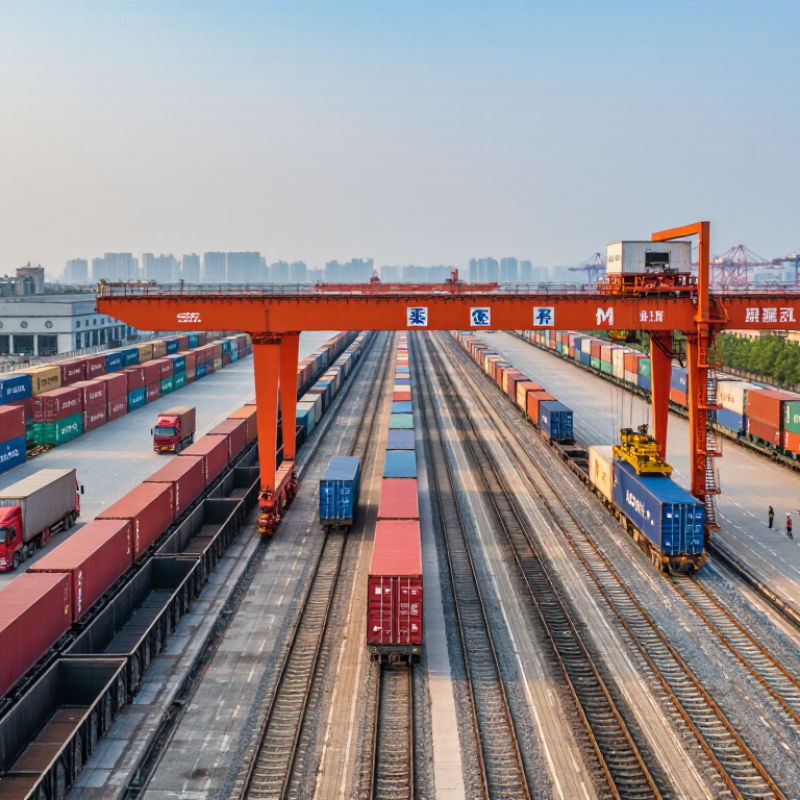
Railway freight is the movement of commercial goods by train across domestic or international rail networks. It commonly carries containers, machinery, agricultural products, and raw materials. In global shipping, rail connects seaports with inland terminals and distribution centers. This makes it an important part of multimodal transport.
A typical shipment may travel by vessel, rail, and truck before reaching its destination. Rail handles the long inland section, where steady capacity can reduce road congestion. Trains also move large volumes with fewer vehicle movements. In my experience, careful planning matters more than simple distance. A container may wait at a terminal if schedules, track gauges, or handling equipment do not align. Small delays can spread quickly.
Railway freight can offer predictable transit times and lower fuel use per tonne than many road movements. However, performance depends on infrastructure, weather, terminal efficiency, and the quality of shipment data. It is not flawless. Shippers should check routing, cargo protection, tracking visibility, and transfer points before booking. Accurate weight records and clear transport documents also reduce handling problems. Some routes remain slower than direct trucking because of limited connections or repeated transfers. That trade-off deserves honest review. Reliable planning comes from comparing the entire journey, not only the rail segment.
Railway freight networks connect international markets through inland terminals, border crossings, and seaports. A shipment may begin near a factory, travel across several rail corridors, and reach a distribution center thousands of kilometers away. This structure gives exporters access to markets beyond coastal cities. It also reduces pressure on crowded highways.
At a busy terminal, workers check container numbers, seals, weight records, and customs documents before departure. These small checks protect cargo visibility during every handoff. Digital tracking can show when a container leaves one network and enters another. That handoff matters. Rail operators and logistics teams must also understand different rail gauges, border procedures, and local delivery rules. Experienced planners build extra time into the schedule, especially during winter or severe weather.
Rail freight often offers steadier costs and lower emissions than long-distance road transport. However, it is not a perfect solution. Delays still happen. A missed connection can affect warehouses, vessels, and customer appointments. The final delivery may still require trucks, which adds another coordination point. Reliable service depends on accurate documents, realistic transit plans, and communication between every country involved. In practice, the strongest networks are not always the fastest; they are the ones that respond clearly when conditions change.
Why Choose Railway Freight for Global Shipping?
Key Advantages of Rail Transport for Global Cargo
Rail freight offers a practical balance between capacity, cost, and environmental performance. The International Energy Agency reports that rail handles about 8% of global passenger and freight activity, while using only around 2% of transport energy. This matters for heavy cargo moving across long inland routes. A freight train can carry steel coils, machinery, or sealed containers with fewer vehicle movements. It also creates less road congestion near busy ports.
Rail transport supports reliable multimodal shipping. Containers can move from a vessel to rail, then continue by truck for final delivery. The International Union of Railways highlights rail’s strong energy efficiency and lower operational emissions compared with road freight. Rail schedules also provide useful planning windows for manufacturers and distributors. Still, rail is not magic. Border procedures, limited terminals, and weather disruptions can affect delivery times. A route may look efficient on paper, yet perform poorly without local coordination. That weakness deserves attention.
Tips: Compare full-route costs, not only the rail rate. Check terminal handling, customs timing, storage, and final-mile delivery. Use tracking data to monitor handovers. Keep a road alternative for urgent cargo. Smaller shipments may need consolidation before rail becomes economical. Planning should include buffer time, especially across multiple borders.
Rail freight sits between ocean shipping and air cargo on cost and speed. The World Bank’s 2023 Logistics Performance Index links reliable schedules with stronger supply-chain performance, yet reliability varies by corridor. In practical planning, rail often costs less than air and reaches inland destinations faster than ocean transport. The comparison is not universal. Border inspections, track changes, and terminal congestion can erase that advantage.
Transit time depends on distance and handling. A container moving across a continent may spend several days in line-haul movement, then face additional hours at terminals. Ocean freight usually offers the lowest unit cost for very large volumes, but port queues can add uncertainty. Air freight is faster, sometimes within one or two days, but its price rises sharply for heavy cargo. International Transport Forum reports also highlight growing freight demand, placing pressure on limited rail slots and intermodal terminals.
Capacity is rail’s practical strength, but also its blind spot. Trains move many containers in one movement and consume less energy per tonne-kilometre than road transport. The European Environment Agency reports that rail generally produces substantially lower freight emissions than heavy road vehicles. Still, rail networks cannot expand overnight. A missed departure may force cargo to wait for the next scheduled path. That can be costly. Shippers should compare total landed cost, including drayage, storage, customs time, and insurance. I would not treat any quoted transit time as a promise. Route data changes.
Costs, transit times, and typical shipment capacity compared with ocean, road, and air freight.
Representative planning benchmarks for a 5,000 km international shipment of non-perishable cargo. Costs are shown in USD per metric ton, transit time in days, and capacity as typical metric tons per shipment or transport unit. Actual results vary by route, cargo type, season, and handling requirements.
International railway shipping offers stable transit and lower emissions, but cross-border movement demands careful planning. Cargo may face different rail gauges, handling systems, customs rules, and documentation requirements. A minor mismatch in a commercial invoice can hold a container at the border. Schedules can slip. Severe weather, track maintenance, and limited terminal capacity can create further delays.
Experienced shippers begin with a route assessment, including border crossings, transfer points, and final-mile access. They confirm cargo dimensions, weight, packaging, labeling, and handling conditions before booking. Use one verified data set for invoices, packing lists, and transport instructions. This simple discipline reduces manual corrections. Build realistic buffer time around customs inspection and gauge transfer. Avoid promising exact arrival dates when local capacity remains uncertain.
Strong packaging matters because containers may be lifted several times. Use moisture barriers, corner protection, and internal bracing for sensitive loads. Inspect seals and record condition with time-stamped photos at each handover. Tracking data should be checked against terminal updates, not trusted blindly. That lesson is easy to miss. A backup road or inland route can protect urgent deliveries when rail capacity tightens. Yet contingency plans cost money, and I have seen teams postpone them until disruption begins. The better practice is to price resilience early and review the plan after every shipment.
| Evaluation Dimension | Indicative Data or Benchmark | Why It Matters in Global Shipping | Main Challenge | Recommended Best Practice |
|---|---|---|---|---|
| Carbon emissions | Rail freight commonly produces about 15–30 g CO₂e per tonne-kilometre, while heavy road freight is often around 60–150 g CO₂e per tonne-kilometre. Actual results vary by locomotive type, fuel, load factor and route. | Rail can reduce transport emissions on suitable long-distance corridors, supporting corporate decarbonization targets. | Emission factors are not uniform across countries and may exclude pre-carriage, terminal handling or final delivery. | Calculate emissions on a full door-to-door basis using shipment weight, distance, traction type, load factor and empty-return assumptions. |
| Transit time | A long-distance international rail movement may take approximately 12–25 days door to door, depending on distance, border procedures, terminal dwell and inland delivery. | Rail can offer a middle ground between slower ocean transport and higher-cost air freight for time-sensitive cargo. | Schedules can be affected by border congestion, track works, weather, customs inspections and equipment shortages. | Use realistic buffer time, milestone alerts and contingency routing instead of quoting only the planned line-haul duration. |
| Typical load capacity | A standard intermodal container generally carries up to about 24–28 tonnes of cargo, subject to container specifications, axle-load limits and local regulations. | High payload potential makes rail suitable for dense, heavy or regularly replenished cargo flows. | The practical limit may be lower because of route restrictions, uneven weight distribution or terminal handling rules. | Confirm gross weight, axle-load limits, container tare weight and local acceptance rules before booking. |
| Cost structure | Rail is usually most cost-effective for medium- to long-distance movements with stable volumes; short routes may be less competitive after terminal and drayage charges. | The economic benefit depends on distance, shipment density, frequency, fuel surcharges, customs costs and first- and last-mile access. | A low line-haul rate can be offset by multiple handling fees, repositioning costs or inefficient inland legs. | Compare total landed logistics cost, including pickup, terminal handling, documentation, border charges, insurance and final delivery. |
| First- and last-mile connectivity | Road drayage is normally required between the shipper or consignee and the rail terminal unless a private rail connection is available. | Door-to-door performance depends on the quality and distance of the road legs, not only on the rail segment. | Poor terminal access, urban congestion and limited appointment availability can create additional dwell time. | Select terminals near production and consumption centers, pre-book drayage and monitor container availability at each handoff. |
| Border and customs processing | A single international movement may involve multiple customs jurisdictions, transit declarations and document checks. | Documentation quality directly affects release time, storage exposure and schedule reliability. | Inconsistent commodity descriptions, incorrect tariff codes, missing permits or mismatched weights can cause holds. | Use standardized commercial invoices, packing lists and tariff classifications; submit data before departure and reconcile all shipment identifiers. |
| Interoperability and gauge changes | Some international corridors use different track gauges, signaling systems, operating rules or electrification standards. | Technical differences can require transloading, bogie exchange or locomotive changes. | Additional interfaces increase handling risk, dwell time and the possibility of schedule disruption. | Confirm corridor compatibility in advance and use compatible containers, seals, handling equipment and interchange plans. |
| Shipment visibility | Tracking quality may vary between rail networks, terminals and road carriers; location updates can be event-based rather than continuous. | Reliable milestone data helps manage inventory, customer communication and exception response. | Different data formats and delayed handoff scans can create gaps in the shipment record. | Define common milestones such as gate-in, departure, border arrival, customs release, terminal arrival and final delivery. |
| Cargo security | Rail containers may remain in terminals or interchange yards during waiting and transfer periods, creating exposure to theft, tampering or weather. | Security controls protect cargo integrity and reduce claims, delays and investigation costs. | Multiple custody transfers make it harder to identify when damage or seal irregularities occurred. | Use high-security seals, verified handoff records, GPS or IoT monitoring where appropriate, and documented inspection procedures. |
| Weather and infrastructure resilience | Flooding, landslides, extreme temperatures, storms and infrastructure maintenance can temporarily reduce rail capacity. | Resilience determines whether rail can support inventory policies with tight replenishment windows. | A disruption on a strategic corridor may affect many shipments simultaneously. | Map alternative routes, ports and modes; maintain safety stock for critical products and establish escalation contacts. |
| Best-fit cargo profile | Rail is generally well suited to containerized, palletized, bulk, heavy and repeat-volume cargo with predictable origin-destination pairs. | Stable flows improve equipment utilization, scheduling accuracy and contract efficiency. | Highly urgent, irregular, oversized or extremely low-volume shipments may not fit the rail operating model. | Segment freight by urgency, weight, value, volume and delivery frequency before selecting rail, road, sea or air. |
Note: Figures are indicative industry ranges rather than guaranteed service levels. Actual performance depends on corridor conditions, cargo characteristics, operating practices, energy mix, infrastructure and local regulations.
CUSTOMER ALERT Beware of fraudulent websites using our name. We do not sell on Craigslist or Facebook Marketplace. Report suspicious contacts to 713-670-8801.