CUSTOMER ALERT Beware of fraudulent websites using our name. We do not sell on Craigslist or Facebook Marketplace. Report suspicious contacts to 713-670-8801.

10 Best Corrugated Suction Hose Suppliers for Global Buyers
Choosing the right Corrugated Suction Hose supplier can influence safety, uptime, and total operating cost. A hose may look suitable on a product page, yet fail under vacuum, abrasion, or repeated bending. This guide introduces ten suppliers serving global buyers and examines their practical strengths. The review considers material quality, reinforcement design, pressure and vacuum ratings, temperature limits, and coupling options. It also looks at production capacity, export experience, documentation, and customer support.
Details matter here. A reliable supplier should provide clear technical datasheets, batch traceability, and test evidence from recognized laboratories. Buyers should also confirm chemical compatibility instead of relying on general material names. Samples can reveal stiffness, wall consistency, and connector fit before a larger order. Delivery performance matters too, especially when hoses support irrigation, dewatering, slurry handling, or industrial transfer systems. Experienced suppliers usually explain these differences without hiding important limitations.
No supplier is perfect. Rankings can change by application, region, order volume, and budget. A manufacturer that performs well for agricultural suction may not suit heavy industrial service. Some suppliers publish excellent specifications but offer limited after-sales communication. Others provide responsive support but fewer customization options. These points deserve careful reflection. The selected companies are assessed through available technical information, buyer-focused criteria, and practical purchasing considerations. Readers should still request current certifications, product samples, warranty terms, and written quotations before making a final decision. That extra step may prevent an expensive mismatch in the field.
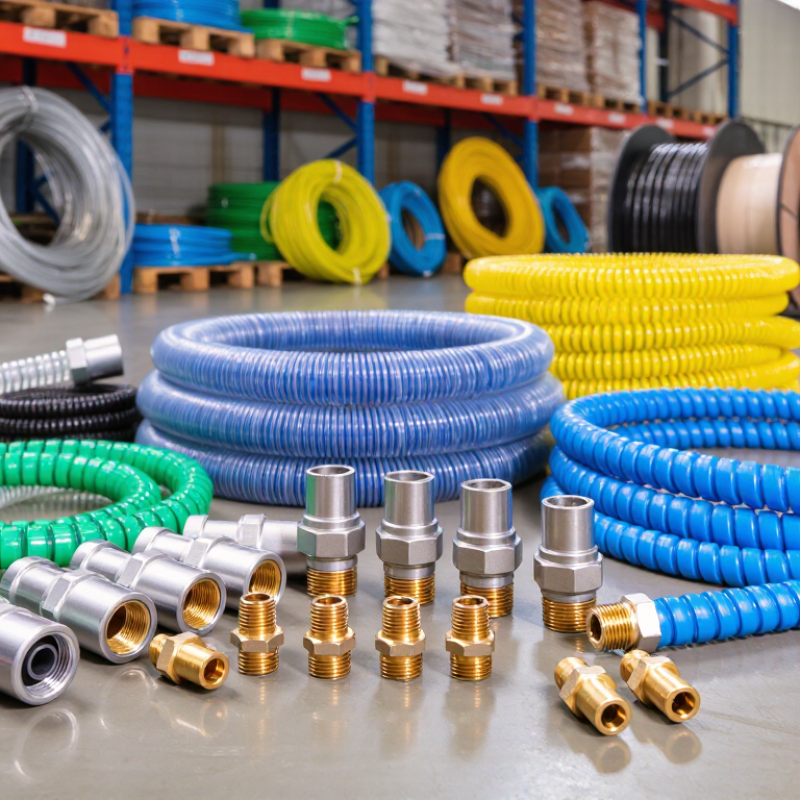
Table of Contents [Hide]
What Corrugated Suction Hoses Are and Where They Are Used
Corrugated suction hoses are flexible, reinforced tubes designed to move liquids, slurries, and light materials under suction. Their ribbed outer wall improves bending strength while reducing collapse risk. Inside, a smooth lining helps maintain flow and limits residue buildup. Many designs include a spiral wire or rigid helix for added vacuum resistance. These hoses commonly connect pumps to tanks, filters, and intake systems.
They are used in agriculture, construction, drainage, water treatment, and industrial transfer work. A farm operator may use one to draw water from a storage tank. A construction crew may use it for dewatering a shallow excavation. Choosing the wrong hose can cause kinking, leaks, or reduced pump performance. No hose is universal. Buyers should check diameter, working pressure, vacuum rating, temperature range, chemical compatibility, and coupling style. Field measurements matter more than assumptions.
Tips: Ask suppliers for test data, material details, and sample fittings. Inspect the hose bend after installation, not only before purchase. A slightly larger diameter may improve flow, but it can strain existing connections. Some specifications look complete yet omit vacuum performance. That deserves a careful question. Reliable suppliers should explain limits clearly and provide consistent documentation for global shipments.
10 Best Corrugated Suction Hose Suppliers for Global Buyers - What Corrugated Suction Hoses Are and Where They Are Used
| No. | Supplier Capability Profile | Typical Hose Construction | Common Inner Diameter | Typical Working Pressure* | Typical Service Temperature* | Common Applications | Key Buyer Checks |
|---|---|---|---|---|---|---|---|
| 1 | General-purpose PVC suction hose supplier | Flexible PVC tube with rigid PVC spiral reinforcement | 25–150 mm | Approximately 2–6 bar | Approximately −5 to +60°C | Water transfer, irrigation, drainage, light industrial pumping and dewatering | Confirm PVC formulation, wall thickness, spiral spacing, vacuum rating and resistance to the intended fluids |
| 2 | Heavy-duty PVC suction hose supplier | Thicker flexible PVC wall with reinforced PVC or steel helix | 50–250 mm | Approximately 3–8 bar | Approximately −10 to +60°C | Construction-site dewatering, sludge handling, agricultural pumping and wastewater transfer | Request crush-resistance, vacuum, abrasion and bending-radius test data for the required diameter |
| 3 | Food and beverage hose supplier | Food-contact PVC, TPU or rubber tube with hygienic reinforcement | 25–100 mm | Approximately 2–6 bar | Approximately −20 to +80°C | Milk, liquid food ingredients, beverage processing and non-oily sanitary transfer | Check applicable food-contact regulations, odor and taste characteristics, cleanability and temperature limits |
| 4 | Chemical-transfer hose supplier | Chemical-resistant thermoplastic or EPDM tube with embedded helix | 25–150 mm | Approximately 3–10 bar | Approximately −20 to +100°C | Dilute acids, alkalis, aqueous chemicals and industrial process liquids | Match liner compatibility to concentration, temperature, exposure time and chemical safety data |
| 5 | Oil and fuel suction hose supplier | Oil-resistant NBR or thermoplastic liner with textile and wire reinforcement | 25–150 mm | Approximately 5–15 bar | Approximately −30 to +100°C | Diesel, lubricating oil, hydraulic oil and selected petroleum-product transfer | Verify fuel compatibility, antistatic requirements, electrical continuity and applicable transport standards |
| 6 | Rubber dredging and slurry hose supplier | Abrasion-resistant natural or synthetic rubber tube with textile or steel reinforcement | 75–600 mm | Approximately 5–25 bar | Approximately −30 to +80°C | Sand, gravel, dredging slurry, mining slurry and highly abrasive solids suspended in water | Evaluate abrasion index, solids concentration, bend radius, end reinforcement and pressure-surging behavior |
| 7 | Agricultural irrigation hose supplier | Lightweight PVC or thermoplastic hose with spiral reinforcement | 25–200 mm | Approximately 2–6 bar | Approximately −10 to +60°C | Irrigation pumps, water intake, fertilizer solutions and farm drainage systems | Check UV resistance, seasonal flexibility, kink resistance, coupling compatibility and reel-packaging options |
| 8 | Vacuum and material-handling hose supplier | Flexible PVC, TPU or rubber tube with closely spaced spiral reinforcement | 25–200 mm | Low positive pressure; vacuum rating is critical | Approximately −20 to +80°C | Powder, granule, pellets, dust collection, vacuum loading and bulk-material conveying | Confirm full-vacuum performance, electrostatic properties, particle abrasion resistance and conveying velocity limits |
| 9 | Marine and bilge hose supplier | Flexible rubber or thermoplastic tube with corrosion-resistant reinforcement | 25–150 mm | Approximately 2–10 bar | Approximately −30 to +80°C | Bilge systems, seawater intake, deck drainage, ballast systems and marine pumping | Check saltwater resistance, flame or smoke requirements, bend radius and marine certification where required |
| 10 | Custom OEM hose supplier | PVC, TPU, EPDM, NBR or silicone selected for the equipment design | 8–600 mm | Application-specific; commonly 1–25 bar | Application-specific; approximately −60 to +180°C | Specialized pumps, mobile equipment, ventilation, industrial machinery and engineered assemblies | Require drawings, tolerance data, prototype approval, batch traceability and documented performance testing |
Corrugated suction hoses are flexible hoses with a corrugated or spiral-reinforced structure designed to resist collapse under suction or vacuum. Before purchasing, global buyers should compare material compatibility, vacuum rating, pressure rating, temperature range, abrasion resistance, connection type, regulatory requirements and test documentation.