What Is a Corrugated Box Feeder Machine?

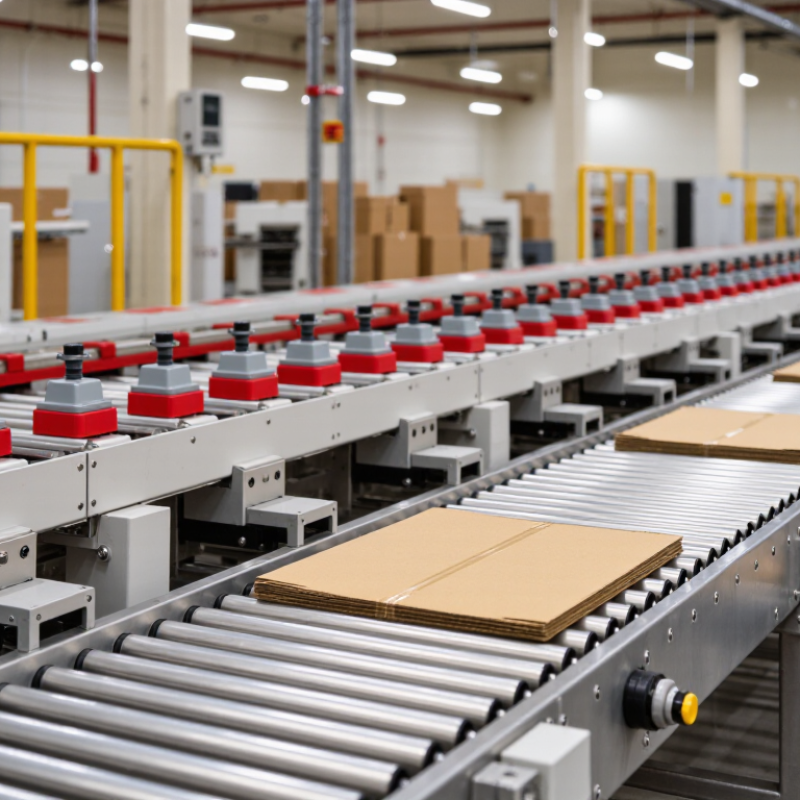
A Corrugated Box Feeder Machine is the controlled entry point of modern box production. It separates, aligns, and delivers flat corrugated blanks into printing, folding, gluing, or die-cutting equipment. Picture a fast conveyor receiving uneven stacks, one sheet at a time. Small feeding errors can create jams, skewed prints, crushed edges, and expensive downtime.

The market pressure is real. Smithers’ report, The Future of Global Corrugated Packaging to 2029, forecasts continued growth in corrugated packaging demand, driven by e-commerce, food delivery, and recyclable transport packaging. PMMI’s 2024 packaging machinery research also highlights automation, labor availability, and production efficiency as important investment concerns. These findings explain why manufacturers examine feeder accuracy, changeover time, sensor reliability, and maintenance access before purchasing equipment.

FEFCO Director General Eleni Despotou has described corrugated packaging as “a natural, renewable and recyclable packaging material.” That sustainability advantage still depends on practical machine performance. A feeder that damages blanks increases waste before the box reaches the customer. A well-adjusted Corrugated Box Feeder Machine can maintain consistent spacing, reduce manual handling, and support stable line speeds.

However, automation is not magic. Board moisture, warped sheets, mixed sizes, and poor stacking can defeat even advanced equipment. Operators must still inspect suction settings, guides, belts, and sensors. This article explains how the machine works, where it fits in a converting line, and which specifications deserve careful comparison. Some results vary by board grade and factory layout. That detail is easy to overlook.
What Is a Corrugated Box Feeder Machine?

Definition and Basic Function of a Corrugated Box Feeder Machine

What Is a Corrugated Box Feeder Machine?

Definition and Basic Function of a Corrugated Box Feeder Machine

A corrugated box feeder machine automatically supplies flat carton blanks to the next packaging process. Its basic function is simple: separate, align, and feed each blank at a controlled speed. Vacuum cups, belts, rollers, and sensors work together during this cycle. The feeder may supply blanks to a printer, folder-gluer, or die-cutter. It reduces manual handling and keeps production timing stable.

Grand View Research valued the global corrugated boxes market at about USD 155.8 billion in 2023. Its report also forecasts continued growth through 2030. This pressure encourages manufacturers to improve feeding accuracy and reduce stoppages. The American Forest & Paper Association reported a 96.5% recovery rate for U.S. corrugated packaging in 2023. Efficient feeding supports better material use, although it cannot correct poor board quality. A warped blank can still misfeed.

Tips: Check blank dimensions, board moisture, and stack height before operation. Keep vacuum filters clean. Adjust side guides carefully. Excessive pressure can mark the board. Insufficient pressure can cause double feeding.

In practice, machine performance is not always perfect. Dust builds up near sensors. Thin board may slide unexpectedly. Operators should record jams, not only reset them. Those small records often reveal worn belts, incorrect timing, or unstable material conditions. A reliable feeder depends on both precise mechanics and thoughtful daily inspection.

Main Components and Their Roles in Box Feeding

A corrugated box feeder machine takes stacked, flat blanks and releases them one at a time. It supports printing, folding, gluing, and die-cutting operations. Its real value is controlled timing. A small delay can disturb the entire production line.

The magazine or hopper holds the blank stack and keeps it ready for feeding. Adjustable side plates maintain alignment and prevent edge drift. A pickup head uses rollers or vacuum cups to lift each blank. Vacuum pressure matters. Too much suction can pull two blanks, while too little may cause slipping. A separation blade or friction gate creates a gap between sheets. This component needs careful adjustment. I have seen clean board feed poorly when humidity softened the edges.

After pickup, belts and feed rollers move each blank toward the next station. Their surface grip and pressure determine feeding stability. Side guides prevent wandering during transport. Sensors detect the leading edge, missing blanks, and double feeds. The controller then adjusts timing and line speed. A drive motor and transmission provide steady torque during continuous operation.

Operators should inspect belts, vacuum lines, guides, and sensors during routine checks. In practice, sensor alignment is often overlooked. That small oversight can create repeated stops. Not every jam indicates a faulty machine; warped board, excessive stack pressure, or incorrect guide settings may be responsible.

How a Corrugated Box Feeder Machine Operates Step by Step

What Is a Corrugated Box Feeder Machine?

A corrugated box feeder machine separates flat box blanks and sends them into a packaging line at a controlled speed. It usually works before folding, gluing, printing, or die-cutting equipment. The process begins with an operator loading a neat stack of corrugated blanks onto the feed table. Side guides are adjusted to match the blank width. Small errors here can cause feeding problems later.

How a Corrugated Box Feeder Machine Operates Step by Step

The machine starts when a sensor detects the stack height. A pickup system uses vacuum cups, belts, or friction rollers to lift the top blank. Air jets may loosen sheets that cling together because of dust, humidity, or static. The upper blank moves forward while separating fingers prevent a second blank from following. This detail matters.

Next, feed rollers grip the blank and carry it toward the registration section. Adjustable guides correct its side position and front edge. Sensors check whether the blank arrives on time and in the expected location. If the sheet is late, doubled, or skewed, the controller can slow the line or stop it. Operators should inspect the rollers regularly. Worn rubber surfaces may slip, especially with lightweight board.

The aligned blank then enters the next machine at a steady pitch. Speed settings must match the downstream equipment, not merely the feeder’s maximum rating. In daily operation, perfect alignment is uncommon. Dust builds quickly. Humidity changes board stiffness. A careful operator makes small adjustments, records recurring faults, and checks whether the setup—not the machine—is causing the issue.

Common Applications in Packaging and Manufacturing

A corrugated box feeder machine automatically separates and delivers flat boxes to the next packaging stage. In manufacturing lines, it reduces repetitive manual handling and keeps cartons moving at a steady pace. The machine can feed boxes into forming units, filling stations, sealing equipment, or labeling systems. This makes it useful for food packaging, household products, electronics, and warehouse fulfillment. Operators usually adjust guides, speed, and suction settings for different carton sizes.

In busy facilities, the feeder supports consistent production during long shifts. It can also reduce crushed edges caused by rushed manual feeding. However, performance depends on carton quality, humidity, and accurate machine setup. A slightly warped box may stop the line. That detail is easy to overlook. Proper integration matters too, because poor alignment between the feeder and downstream equipment can create repeated jams. Regular cleaning and inspection help maintain reliable operation, although no machine removes every production risk.

Tips: Check carton dimensions before each run. Keep the feed area dry and free of scraps. Test several boxes at operating speed, not only one carton. Record jams and adjust guides gradually. A practical review after each shift can reveal small issues before they become expensive delays.

Key Benefits and Selection Considerations

What Is a Corrugated Box Feeder Machine?

Key Benefits and Selection Considerations

A corrugated box feeder machine moves flat cartons into a production line at a controlled speed. It separates stacked blanks, aligns them, and feeds each carton toward printing, folding, gluing, or packing equipment. In practical use, this reduces repetitive handling and keeps operators away from fast-moving rollers. A stable feeder can also reduce stoppages caused by uneven carton spacing.

The main benefit is consistent output. Many systems handle hundreds of blanks per minute, depending on carton size and material. They can lower labor pressure and reduce damage from careless manual feeding. In a busy plant, accurate feeding also helps printers maintain cleaner registration. I have seen small alignment errors create waste within minutes. Speed alone does not solve that problem.

Selection requires careful attention to carton dimensions, board thickness, flute type, and required speed. Check whether the machine supports your smallest and largest blanks. A wide adjustment range is valuable, but excessive flexibility can make setup slower. Ask about sensor accuracy, belt maintenance, changeover time, and access to replacement parts. Safety guards and emergency stops should be easy to inspect. Dusty environments need reliable cleaning access. Noise matters, too.

One assumption often fails: a faster feeder is not always better. If the downstream folder cannot match its pace, cartons may collide or pile up. Test representative blanks, including warped or slightly damaged samples. Real production material can behave differently from clean showroom samples. Leave room for operator judgment, because automation still needs practical oversight.

What Is a Corrugated Box Feeder Machine? - Key Benefits and Selection Considerations

Data Dimension Typical Data or Specification Operational Meaning Selection Consideration
Machine function Automatically separates and transfers corrugated blanks into a folder-gluer, printer, die-cutter, or related converting line. Creates a controlled, continuous flow of blanks and reduces manual loading. Confirm that the feeder is designed for the exact downstream machine and blank format.
Feeding method Common systems include friction feeding, vacuum-assisted feeding, belt feeding, and servo-controlled sheet separation. The method affects grip, registration accuracy, noise, and performance with coated or dusty board. Choose vacuum assistance for porous, warped, heavily printed, or difficult-to-separate blanks.
Typical production speed Approximately 60–300 blanks per minute for many inline applications; actual output depends on blank size, board quality, and line configuration. Higher speed can increase hourly output but may reduce stability if blanks are poorly stripped or warped. Compare the guaranteed sustained speed, not only the machine’s maximum rated speed.
Board compatibility Many systems handle single-wall and double-wall corrugated board; some support triple-wall board with special feeding components. Board construction affects stiffness, separation force, vacuum demand, and transport stability. Provide samples covering the thinnest, thickest, smallest, and largest blanks used in production.
Board thickness range A practical range for many applications is roughly 1.5–8 mm, but the permitted range varies by feeder design. The machine must maintain separation and alignment across different flute profiles and calipers. Check the permitted board caliper and flute types in the technical documentation.
Blank size flexibility The usable size range is application-specific; compact feeders may handle small cartons, while industrial units accommodate large-format blanks. A wider format range reduces the need for separate equipment when product sizes change. Evaluate minimum and maximum blank length, width, diagonal, and flap geometry.
Changeover time Manual changeovers commonly take about 5–20 minutes, depending on format complexity and adjustment design. Fast setup reduces downtime when producing multiple carton sizes in short runs. Look for scales, quick-lock guides, recipe storage, and tool-free adjustment points.
Registration and feed accuracy Typical industrial systems target repeatable positioning within approximately ±1–2 mm, subject to board quality and line conditions. Accurate feeding supports consistent folding, gluing, printing, and die-cutting. Request a performance test using actual production blanks and measure sustained accuracy at operating speed.
Automation features Common features include servo drives, touchscreen controls, automatic gap adjustment, jam detection, batch counting, and recipe management. Automation improves repeatability and reduces operator intervention. Select features according to product mix, operator skill, line integration, and required traceability.
Labor impact One operator can often supervise feeding and replenishment, although staffing depends on stack height, line layout, and safety procedures. The feeder can reduce repetitive manual placement and improve operator consistency. Calculate labor savings together with loading, inspection, replenishment, and maintenance tasks.
Compressed air and vacuum Vacuum-assisted systems may require plant air and a dedicated vacuum source; consumption varies substantially by design and speed. Insufficient air pressure or airflow can cause double feeds, missed feeds, or unstable transfer. Verify required pressure, flow rate, filtration, noise level, and available plant capacity before installation.
Electrical demand Small and medium feeders often use a few kilowatts; systems with conveyors, vacuum pumps, and automation may require approximately 2–15 kW. Power requirements influence installation cost and operating expense. Confirm voltage, phase, frequency, connected load, and energy consumption under normal production conditions.
Safety provisions Typical provisions include guards, emergency-stop devices, access interlocks, jam-clearing procedures, and lockout points. Safety controls protect operators from moving belts, rollers, pinch points, and unexpected restarts. Check compliance with applicable local machinery-safety requirements and conduct a site risk assessment.
Floor space and integration Required space includes the feeder, stack access, operator clearance, electrical cabinet, air lines, and maintenance access. Poor layout can restrict replenishment, inspection, cleaning, and emergency access. Use a scaled layout drawing and confirm conveyor height, line direction, communication signals, and access zones.
Maintenance requirements Routine tasks generally include cleaning dust from belts and sensors, inspecting rollers, checking suction filters, and lubricating specified components. Preventive maintenance helps maintain feed accuracy and minimize unplanned stoppages. Request a maintenance schedule, spare-parts list, expected wear-part life, and service access requirements.
Best-fit applications Medium- to high-volume carton production, repetitive blank feeding, multi-shift operations, and lines requiring stable automated throughput. Automation is most valuable when manual feeding limits speed, quality, or labor availability. Compare the investment with current labor cost, downtime, scrap rate, production volume, and expected payback period.
Note: The numerical ranges are general industry reference values. Actual performance depends on machine configuration, corrugated board quality, blank geometry, downstream equipment, operating conditions, and supplier testing.