What is a conex container and how is it used?
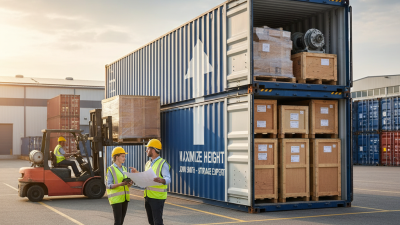
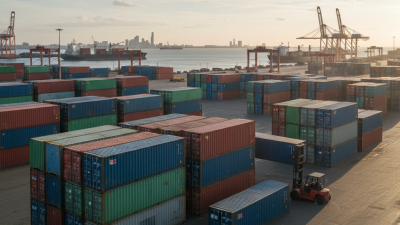
A conex container, often referred to as a shipping container, plays a crucial role in modern logistics. These robust metal boxes are standard-sized and stackable. They facilitate easy transport of goods across various modes of transport, including ships, trucks, and trains. Many businesses rely on conex containers for their shipping needs.
Conex containers come in various sizes, commonly 20 feet or 40 feet long. This versatility allows for efficient storage and transportation of diverse products. From automobiles to electronics, almost anything can be transported in a conex container. However, one must consider weight limits and stability during transport.
While conex containers are incredibly useful, there are challenges. Not all containers are weatherproof, which can damage certain items. Additionally, local regulations may restrict their use in some areas. Over time, the landscape of container shipping may change, needing reflection on best practices. Understanding the conex container’s role helps in navigating these complexities.
Definition and Origin of Conex Containers
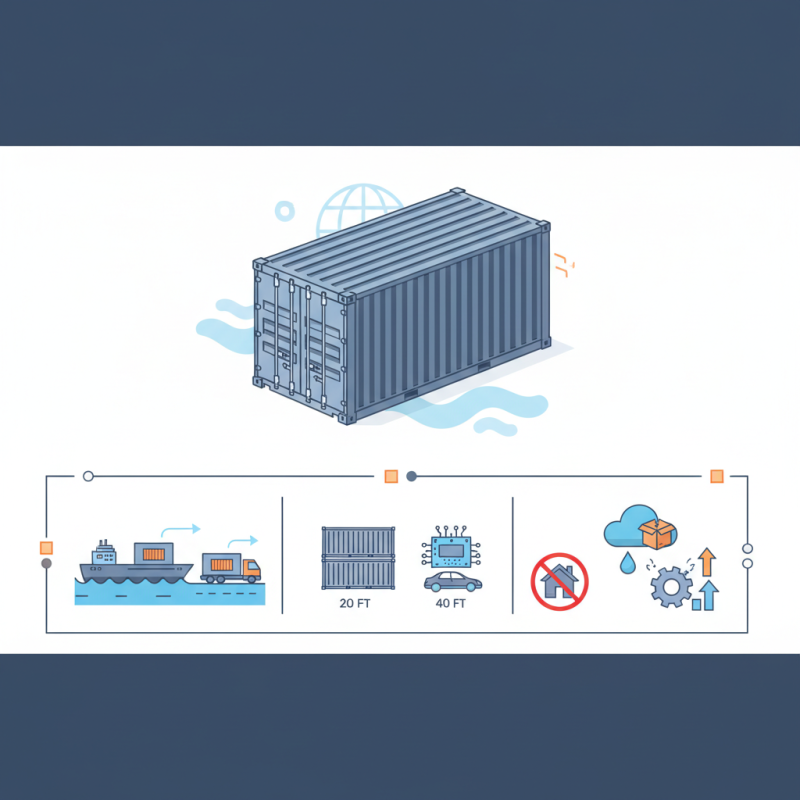
Conex containers, known as shipping containers, have a rich history. They originated in the early 1960s when the need for efficient cargo transport became critical. Standardized sizes were established to facilitate trade. According to industry reports, the global container shipping market was valued at around $8.5 billion in 2021. This figure emphasizes the significance of these containers in international logistics.
The term "Conex" derives from "Container Express," which reflects their original purpose. They are designed for seamless movement across ships, trucks, and trains. A standard container measures 20 feet or 40 feet in length. These dimensions make them ideal for stacking, maximizing cargo space. Many companies use Conex containers for temporary storage solutions. They can also be converted into offices or homes.
Tips: When choosing a container, consider its condition. Inspect for rust or damage. Maintenance is key. Be aware that not all containers are suitable for all purposes. Research local regulations regarding container usage in your area. Storage needs may vary significantly from one project to another.
Types of Conex Containers and Their Specifications
Conex containers, known for their durability, come in various types. Each type serves unique needs. The most common type is the standard dry container. It is typically 20 or 40 feet long. These containers are great for general cargo. They protect goods from weather damage.
Another type is the refrigerated container. These containers maintain specific temperatures. They are ideal for perishable goods like fruits or medical supplies. The operation requires a power source. This adds complexity to logistics but ensures products stay fresh.
There are also open-top containers. These allow for taller cargo that cannot fit inside standard containers. However, loading and securing cargo can be challenging. Lastly, flat-rack containers are for oversized items. They require careful handling. Each type has its pros and cons, requiring reflection on best uses.
Common Uses of Conex Containers in Various Industries
Conex containers, also known as shipping containers, have numerous applications across various industries. They are primarily used for transporting goods. However, their versatility extends far beyond shipping. For instance, in the construction industry, Conex containers serve as
temporary offices and
storage units. According to industry reports, over
70% of construction companies utilize these containers due to their cost-effectiveness and durability.
In the retail sector, Conex containers are transforming how businesses approach logistics. Retailers use them for
mobile pop-up shops. This method allows for quicker setup and reduced overhead costs. A recent survey revealed that
45% of retailers plan to incorporate portable structures in their operations in the coming year.
Tip: When considering using a conex container, assess your unique needs. Size, insulation, and security features can significantly impact functionality.
Moreover, the energy sector has embraced Conex containers. They are used for housing equipment and personnel on remote sites. A study indicates that about
60% of energy companies favor modular solutions for their operations. This reflects a growing trend in utilizing flexible and scalable structures.
Tip: Ensure that local regulations allow the use of conex containers for your intended purpose. Always check zoning laws and safety requirements.
Benefits of Using Conex Containers for Storage and Transport
Conex containers, often seen on shipping docks, have become essential for storage and transport. They offer a robust solution for businesses needing space. These containers are weather-resistant and can house a variety of goods. This makes them ideal for situations where traditional storage fails.
One significant benefit of using Conex containers is their portability. They can be easily transported across long distances, making them a popular choice for shipping goods. They can also be stacked, helping to save valuable space. However, uneven stacking can lead to instability, which requires careful planning.
**Tip:** Avoid stacking containers too high without securing them properly. Another advantage is their durability. Built to withstand harsh conditions, they will protect your items. Yet, frequent exposure to moisture could lead to rust. Regular inspections are crucial for maintaining their condition.
**Tip:** Inspect containers for leaks before loading. Proper maintenance extends their lifespan. Conex containers can also be modified for specific needs, like creating office spaces or workshops. Reflect on how best to utilize the space effectively.
What is a conex container and how is it used? - Benefits of Using Conex Containers for Storage and Transport
| Dimension |
Description |
Benefits |
| Size |
Standard lengths of 20ft and 40ft |
Flexible for transport and storage |
| Durability |
Made from steel, resistant to harsh weather |
Protects goods effectively |
| Security |
Lockable steel doors |
Enhanced security for valuable items |
| Versatility |
Used for shipping, storage and even living spaces |
Adaptable to various needs |
| Cost-Effective |
Lower transport costs |
Saves money over traditional storage options |
Safety Standards and Regulations for Conex Containers
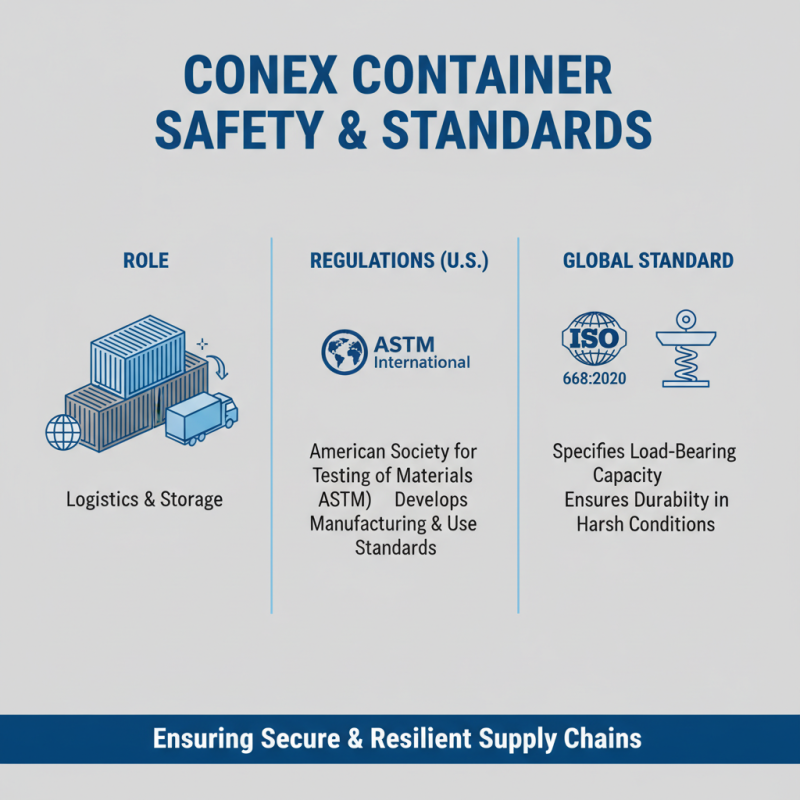
Conex containers, often referred to as shipping containers, play a vital role in logistics and storage. However, their safety standards and regulations are crucial. In the United States, the American Society for Testing and Materials (ASTM) develops standards that govern the manufacturing and use of these containers. According to the ISO 668:2020 standard, containers must meet specific load-bearing capacities. These standards help ensure that the containers can withstand harsh conditions.
Proper safety measures are essential for handling Conex containers. They must be inspected regularly for structural integrity and signs of wear. The Occupational Safety and Health Administration (OSHA) emphasizes the need for protective gear when working around these containers. This includes gloves, hard hats, and safety shoes. Operators should also be trained in emergency response procedures.
Tips: Always check for rust or damage. A degrading container can pose serious risks. Ensure adequate ventilation when storing materials inside, as trapped fumes can accumulate. Regular maintenance checks can prevent potential hazards. While these standards are strict, not all containers comply effectively. This inconsistency can lead to safety oversights that warrant reflection and improvement.