What is a Conex Container and How to Use It for Shipping?
In the world of international shipping, the conex container has become a standard means of transporting goods. This metal box, often seen on cargo ships and trucks, is known for its durability and versatility. Many businesses rely on conex containers to ship everything from electronics to heavy machinery. Their robust design ensures protection against various weather conditions during transit.
Understanding how to effectively use a conex container is essential for successful shipping. It’s important to know the dimensions and weight limits of these containers. Selecting the right size can save costs and prevent damage to products. However, improper loading techniques can lead to logistical challenges. For instance, overloading a container may cause delays or accidents.
Experience with conex containers can help improve shipping strategies. Organizations can better manage supply chains by analyzing past shipments. Reflection on these processes often reveals areas for improvement. Adapting to challenges in shipping practices leads to greater efficiency. This is the core of maximizing the benefits that a conex container can provide.

What is a Conex Container? Definition and Basic Characteristics
A Conex container, commonly known as a shipping container, is a standardized steel box. It is designed for transporting goods over long distances. These containers come in various sizes, with the most common being 20 feet and 40 feet. They are built to withstand harsh weather conditions and rough handling. The robust construction ensures that the contents are protected, whether they are shipped by sea, rail, or road.
These containers are not only used for shipping but also serve other purposes. Many people repurpose them into storage units, mobile offices, or even homes. This versatility adds to their appeal. However, it is essential to consider the location where they will be placed. Some areas may have restrictions or zoning laws regarding the use of shipping containers. Additionally, you might face challenges with insulation and ventilation if you intend to convert them into living spaces.
Using Conex containers effectively requires planning. Ensure you choose the right size for your needs. Also, consider how you will load and unload the container. Accessibility is vital. Shipping costs can vary, so research options before proceeding. While these containers offer numerous benefits, not everyone may find them suitable for their specific requirements.
Conex Container Usage Statistics
This bar chart illustrates the percentage of Conex containers used across various applications. The primary use is for storage (40%), followed by shipping (30%). Other applications include modular homes (15%), mobile offices (10%), and emergency relief (5%).
Common Sizes and Types of Conex Containers in the Shipping Industry
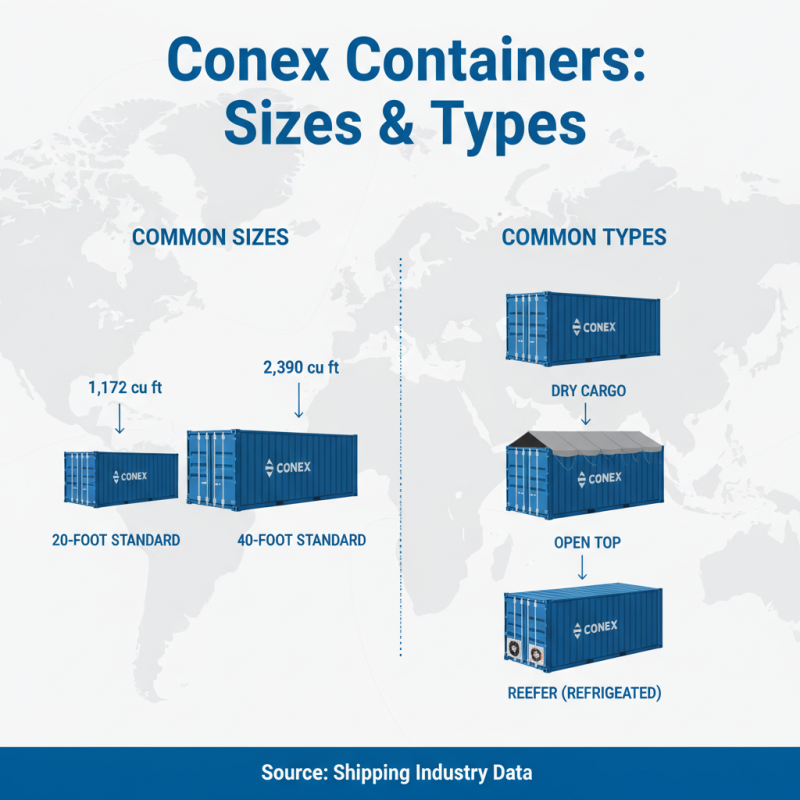
Conex containers, also known as shipping containers, are essential in the shipping industry. They come in various sizes and types, tailored to fit diverse shipping needs. Common standard sizes include 20-foot and 40-foot containers. The 20-foot container typically has a volume of about 1,172 cubic feet, while the 40-foot version offers approximately 2,390 cubic feet. Understanding these dimensions helps businesses choose the right container for their cargo.
Each type of container serves specific purposes. For instance, dry containers are the most common, suitable for general cargo. Refrigerated containers, or reefers, maintain temperature-sensitive goods. According to industry reports, approximately 60% of global shipping is done using standard containers, signifying their critical role in international trade. Choosing the right type of container can significantly impact shipping efficiency and costs.
Tip: Always assess the nature of the cargo. Packaging perishables requires reefers, while bulky items might fit well in high-cube containers. An informed choice minimizes damages and delays.
It’s important to remember that while containers are strong, they can be prone to wear and tear. Regular inspections are vital to ensure they meet safety standards. Any compromise in integrity can lead to costly losses.
Key Advantages of Using Conex Containers for Global Shipping
Conex containers, also known as shipping containers, have transformed global shipping. One primary advantage is their standardization. The International Organization for Standardization (ISO) regulates dimensions, ensuring easy transfer between ships, trucks, and trains. This standardization boosts efficiency and reduces shipping times significantly. In fact, reports indicate that using standardized containers can reduce loading and unloading times by up to 50%.
Durability is another key benefit. Conex containers are made from rust-resistant steel. This ensures that goods remain secure during long journeys. Moreover, they are designed to withstand harsh weather conditions. According to industry data, around 90% of global trade is conducted through container shipping. An essential factor in this statistic is the protection containers provide against theft and damage.
However, there are challenges. Maintenance costs can add up. While they are built to last, neglect can lead to deterioration. Additionally, improper stacking can risk safety during transport. A recent study highlighted that 20% of container incidents occur due to mishandling. This emphasizes the need for proper training and adherence to safety guidelines in the container shipping industry.
How to Properly Load and Secure Goods in a Conex Container
When loading a Conex container, organization is key. Begin by assessing your goods. Identify their weight and dimensions. This step helps in planning the arrangement. Heavier items should go on the bottom. This ensures stability during transit.
Arranging your cargo efficiently can prevent damage. Use packing materials like bubble wrap and foam. These materials protect fragile items. Secure everything tightly with straps or ropes. This minimizes movement. Remember, loose items can shift and cause accidents.
Tip: Label each box clearly. This makes unloading easier. It'll save time when reaching your destination. Keep a list of the contents for your records.
Lastly, consider the weight distribution. An uneven load can make transport unsafe. Use a scale if you’re unsure. Periodically check during loading to maintain balance. Taking these careful steps ensures your goods arrive safely.