CUSTOMER ALERT Beware of fraudulent websites using our name. We do not sell on Craigslist or Facebook Marketplace. Report suspicious contacts to 713-670-8801.

Choosing a Terrain Cart in 2026 requires more than comparing prices and motor power. Global buyers must match the cart with real working conditions. A steep farm path demands different performance from a paved warehouse route. Mud, loose gravel, wet grass, and narrow gates can expose weaknesses quickly. Imagine moving a 300-kilogram load across a hillside after heavy rain. Wheel size, ground clearance, braking control, and frame strength suddenly matter more than appearance.
A practical evaluation should examine payload ratings, battery range, charging systems, turning radius, and operator controls. Check whether the stated capacity applies on level ground or uneven terrain. That detail is often missing. Ask suppliers for test data, maintenance schedules, spare-parts availability, and warranty terms. A dependable manufacturer should explain motor protection, battery safety, and emergency stopping procedures clearly. Buyers should also verify import documents, electrical requirements, workplace rules, and regional compliance before placing an order. Requirements differ between countries and industries. Do not rely on a translated brochure alone.
No cart is perfect. A stronger frame may reduce maneuverability, while a larger battery can increase weight and transport costs. Cheap units may perform well during a short demonstration, then struggle under continuous loads. Experienced buyers should request videos, inspection records, and references from similar operations. When possible, test the Terrain Cart on the actual route, including slopes, doorways, and loading areas. That trial may reveal uncomfortable truths. A careful decision balances safety, service support, total ownership cost, and measurable field performance—not marketing promises.
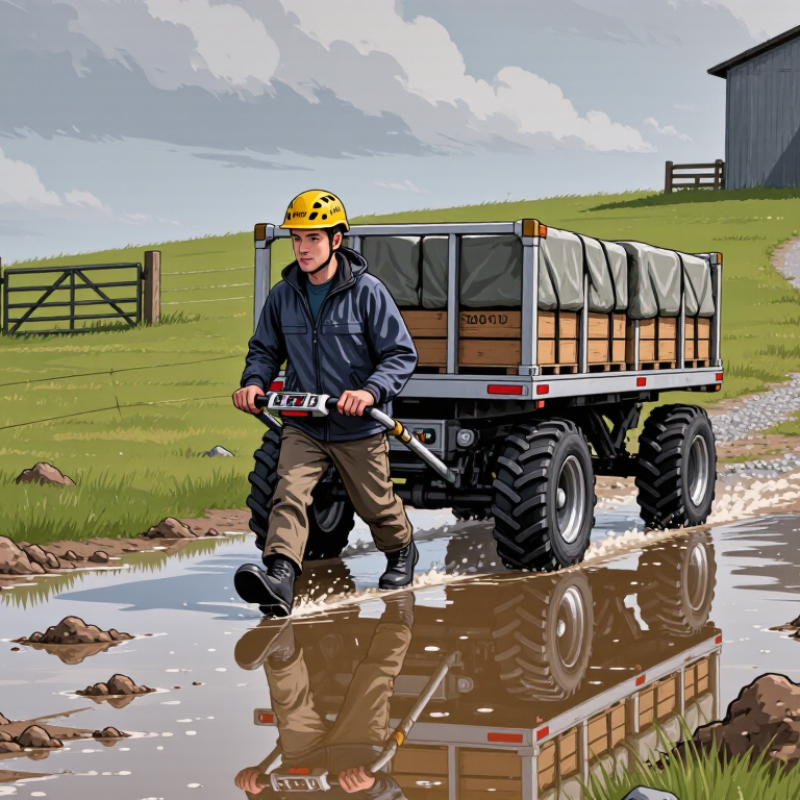
A four-wheel utility cart suits farms, resorts, and maintenance roads. It offers stable handling and a tighter turning radius.
Six-wheel carts carry heavier loads across gravel, mud, and uneven grass. Their longer frames need wider paths.
Tracked carts perform better on soft soil and steep ground, but they usually move slower and consume more energy.
A powered hand cart may be better for stairs, narrow corridors, and short warehouse routes.
That choice is often overlooked.
The UN World Urbanization Prospects reports that 56% of people lived in urban areas in 2021. It projects nearly 68% by 2050. This supports demand for compact carts in campuses, construction sites, and public facilities.
Buyers should measure doorway width, ramp gradient, payload, ground clearance, and turning space.
Check battery replacement access, charging voltage, and weather protection for each destination.
The IEA Global EV Outlook 2024 recorded nearly 14 million electric car sales in 2023, representing about 18% of new car sales. Electric drivetrains are becoming familiar, but terrain carts face heavier loads and slower speeds.
Do not copy passenger-vehicle assumptions.
Drive the cart over wet clay, loose stones, and a loaded ramp. Observe braking, wheel slip, visibility, and operator fatigue.
A high-capacity model can still fail on a narrow path.
I have seen buyers prioritize payload and regret ignoring turning space. That lesson deserves repeating.
Data helps, but ground conditions decide.
A terrain cart should match the ground, not merely its advertised payload. Inspect slopes, loose gravel, wet soil, narrow paths, and sudden surface changes. A cart carrying 500 kilograms on concrete may perform differently on sand. Measure the steepest route and note turning space before comparing specifications. Ground clearance, tire design, braking control, and traction deserve equal attention. In cold regions, battery performance may decline. In hot, dusty areas, cooling and sealing become more important.
Tips: Test the cart with the actual load, including tools and containers. Drive it uphill, downhill, and across uneven ground. Record travel speed, stopping distance, and energy use. Leave a safety margin of at least 20 percent for payload and operating distance. Real conditions are rarely generous.
Operating distance also depends on terrain, temperature, driver habits, and repeated stops. Calculate the daily route, then add reserve capacity for unexpected detours. A lightweight cart may travel farther, but it can become unstable under a tall or shifting load. A heavier model may feel safer, yet consume more energy. This trade-off is easy to underestimate. Check rated payload, axle limits, ramp ability, and charging requirements from technical documentation. Ask for independent test data when available. No estimate is perfect. Careful field trials still reveal weaknesses that brochures overlook.
Choosing a terrain cart starts with its power system. Battery drive suits quiet campuses, farms, and indoor facilities. Fuel-powered systems may offer longer operation in remote areas. Compare charging access, temperature performance, service availability, and total operating cost. A larger battery is not automatically better. Weight can reduce range on soft ground. Check torque, not only advertised speed.
Wheels should match the surface beneath them. Wide, deep-tread tires reduce sinking on sand and wet soil. Smaller tires may improve maneuverability on paved paths. Suspension matters when carrying tools or fragile loads across gravel. Independent suspension can improve comfort, but it may require more maintenance. Steering should feel predictable, especially on slopes. Test turning radius with a full payload. Empty-cart testing can mislead buyers.
Tips: Ask for a loaded demonstration. Measure stopping distance. Inspect tire replacement options locally. Review the steering response at walking speed and on uneven ground. I would also record battery use during a normal workday, because laboratory figures can feel optimistic. One overlooked detail is operator posture; poor control placement causes fatigue before the cart appears stressed. Regional training, spare parts, and documented safety procedures deserve equal attention. A technically impressive cart can still be impractical when support is distant.
When choosing a terrain cart in 2026, safety should begin with the actual route, not the brochure. I inspect slopes, loose gravel, standing water, blind corners, and pedestrian crossings. A low center of gravity, effective service brakes, rollover protection, seat restraints, lights, alarms, and reliable reverse visibility matter more than decorative power ratings. The U.S. Bureau of Labor Statistics reported 2,066 fatal transportation incidents in 2022, representing 37.7% of workplace fatalities. This is not a cart-specific rate, but it shows why traffic separation and operator training deserve attention.
Durability depends on details. Check welded joints, axle protection, corrosion-resistant fasteners, tire load ratings, and the battery enclosure. Ask for endurance-test records, load limits, and cold-weather performance data. I prefer accessible filters, sealed connectors, replaceable brake parts, and a published maintenance schedule. Perfect maintenance assumptions are unrealistic. Missed inspections happen. Design should tolerate them, without encouraging them. For lithium-powered carts, review battery safety documentation, charger protection, and transport testing under UN 38.3 where applicable. Compliance also requires market-specific verification: ISO 3691-1 may apply to certain industrial trucks, while IEC 60204-1 can support electrical safety assessment. Neither standard automatically covers every terrain cart. Request test reports, conformity declarations, serial-number traceability, and local certification evidence before importing. A supplier that cannot explain braking tests or spare-parts availability is a practical risk.
Choosing a terrain cart in 2026 requires more than comparing purchase prices. Supplier evidence matters. Request load tests, gradient trials, battery-cycle records, and spare-parts lead times. ISO 9001 certification supports process control, but it does not guarantee field performance. Ask for traceable test data from conditions resembling your site: gravel, mud, rain, and steep ramps.
Calculate total cost over five years. Include the cart, battery replacements, chargers, tooling, insurance, duties, inland transport, training, and downtime. UNCTAD reports that over 80% of global merchandise trade by volume moves by sea, so port delays can affect delivery budgets. The World Bank’s 2023 Logistics Performance Index evaluates 139 economies, highlighting customs, infrastructure, tracking, and timeliness. These factors can change the delivered cost sharply. Cheap freight is not always cheap.
Customization should solve measured problems, not decorate the specification sheet. Confirm payload, ground clearance, turning radius, braking distance, weather protection, and charging standards. A supplier should provide drawings, interface details, and acceptance criteria before production. Use clear Incoterms and require packaging photos before shipment. Global delivery also needs local service contacts and stocked wear parts. Some buyers overestimate customization benefits. I have seen small changes create long delays, because approval details were unclear. A pilot order may expose weak assumptions before a larger commitment.
A practical 100-point evaluation framework for global buyers. Supplier reliability, landed cost, customization capability, delivery performance, and after-sales support should be assessed together rather than by unit price alone.
Recommended evaluation weighting: use the percentages as a purchasing scorecard, then adjust them according to terrain, order volume, destination regulations, and required delivery date.
CUSTOMER ALERT Beware of fraudulent websites using our name. We do not sell on Craigslist or Facebook Marketplace. Report suspicious contacts to 713-670-8801.