CUSTOMER ALERT Beware of fraudulent websites using our name. We do not sell on Craigslist or Facebook Marketplace. Report suspicious contacts to 713-670-8801.


China Top 10 Refrigerated Container Manufacturers?
China has become a major production base for refrigerated container equipment. Its manufacturers serve shipping lines, leasing companies, food exporters, and cold-chain distributors worldwide. However, “top” should not mean factory size alone.
A refrigerated container must protect cargo through port transfers, ocean voyages, customs delays, and inland delivery. Small temperature changes can damage berries, seafood, vaccines, or chilled meat. That is why this guide examines more than production capacity. It considers cooling performance, insulation quality, controller accuracy, energy consumption, corrosion resistance, testing procedures, after-sales support, and global spare-parts availability.
Drewry’s Reefer Shipping Annual Review highlights the continuing importance of reliable temperature-controlled logistics as perishable trade expands. UNCTAD’s Review of Maritime Transport also shows how containerized shipping depends on resilient equipment and efficient port networks. These reports provide useful industry context, but they do not create a universal manufacturer ranking.
The following overview therefore compares ten Chinese manufacturers through practical purchasing criteria. Factory certifications matter. So do weld quality, door-seal performance, airflow design, and response time after a compressor alarm. A strong brochure is not enough.
Real-world performance can vary by model, production batch, maintenance quality, and operating climate. This is often overlooked. Buyers should request test records, warranty terms, reference fleets, and independent inspection results before signing a contract. Some suppliers may excel at standard 40-foot units, while others provide stronger customization or regional service.
The ranking is a starting point, not a final verdict. Each company deserves careful technical and commercial review.
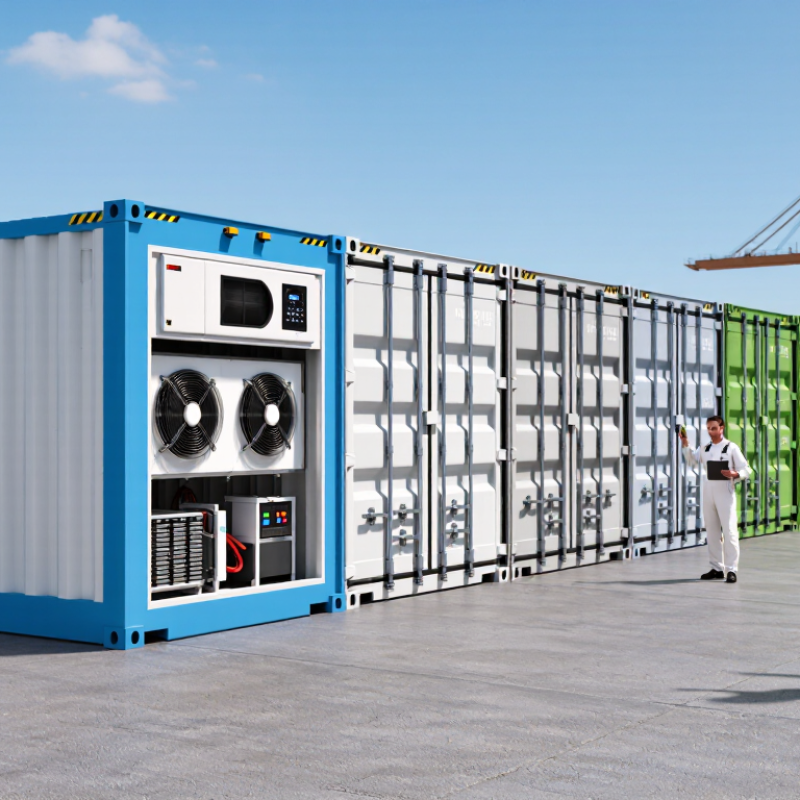
Table of Contents
[Hide]
Definition and Role of Refrigerated Containers in China
China’s refrigerated container industry supports the movement of temperature-sensitive cargo across ports, railways, highways, and inland warehouses. A refrigerated container, or reefer, is an insulated shipping unit with an active cooling system. It controls temperature, airflow, and sometimes humidity during transport. Common cargo includes seafood, fresh produce, dairy products, and approved medical materials.
In China, reefers connect major coastal ports with inland consumption centers and processing areas. Their role is not simply to keep cargo cold. They also protect quality, reduce spoilage, and help maintain traceable logistics records. Operators must check the cargo’s required temperature before loading. A frozen product may need around -18°C, while chilled goods often require a different range. Small mistakes can cause condensation, damaged packaging, or hidden quality loss. No reefer system is perfect.
Tips: Pre-cool the container when cargo requirements allow it. Inspect door seals, drain channels, sensors, and power connections. Avoid blocking internal air vents with cartons. Record temperature readings before departure and during transfers. Choose a container based on cargo volume, route length, and power availability. A short test run can reveal unstable cooling before a long journey begins. Maintenance records also improve reliability, although they may not show every handling problem.
China Top 10 Refrigerated Container Manufacturers? - Definition and Role of Refrigerated Containers in China
| Rank | Reference Configuration | Typical ISO Size | Approx. External Dimensions | Typical Temperature Range | Primary Role in China | Common Cargo | Key Technical Considerations |
|---|---|---|---|---|---|---|---|
| 1 | Standard 20-foot refrigerated container | 20 ft ISO reefer | 6,058 × 2,438 × 2,591 mm | Approximately −30°C to +30°C | Domestic distribution, port handling, and short- to medium-distance export logistics | Frozen foods, seafood, meat, and pharmaceuticals | Requires compatible corner castings, reefer power access, and sufficient airflow around cargo |
| 2 | Standard 40-foot refrigerated container | 40 ft ISO reefer | 12,192 × 2,438 × 2,591 mm | Approximately −30°C to +30°C | High-volume cold-chain transport between production regions, ports, and distribution centers | Fresh produce, chilled meat, dairy products, and frozen goods | Offers greater capacity than a 20-foot unit while retaining standard intermodal compatibility |
| 3 | 40-foot high-cube refrigerated container | 40 ft high-cube reefer | 12,192 × 2,438 × 2,896 mm | Approximately −30°C to +30°C | Long-haul export logistics and cargo requiring additional internal volume | Carton-packed produce, seafood, frozen foods, and temperature-sensitive ingredients | Provides additional internal height; total loaded weight remains subject to road, rail, and vessel limits |
| 4 | Controlled-atmosphere refrigerated container | 20 ft or 40 ft ISO reefer | Based on selected ISO size | Typically about −2°C to +15°C, depending on cargo | Extends shelf life of selected fruits and vegetables during export and domestic transport | Apples, pears, kiwifruit, and other respiration-sensitive produce | Uses controlled oxygen and carbon-dioxide conditions in addition to temperature control |
| 5 | Pharmaceutical-grade refrigerated container | 20 ft or 40 ft ISO reefer | Based on selected ISO size | Commonly +2°C to +8°C or +15°C to +25°C | Temperature-controlled movement of medicines, vaccines, and biological materials | Vaccines, clinical supplies, biologics, and temperature-sensitive medicines | Needs validated temperature mapping, monitoring, alarm management, and documented handling procedures |
| 6 | Deep-frozen cargo refrigerated container | 20 ft or 40 ft ISO reefer | Based on selected ISO size | Usually −25°C to −30°C set-point operation | Maintains frozen cargo during ocean transport and inland transfer | Frozen seafood, ice cream, frozen meat, and prepared foods | Cargo must normally be pre-frozen; the unit is designed mainly to maintain, not rapidly reduce, product temperature |
| 7 | Chilled-food refrigerated container | 20 ft or 40 ft ISO reefer | Based on selected ISO size | Commonly 0°C to +5°C | Supports chilled supply chains for retail, foodservice, and food processing | Dairy, fresh meat, seafood, vegetables, and ready-to-eat foods | Correct set point, humidity management, and ventilation are important for product quality |
| 8 | Dual-temperature refrigerated container | Specialized 40 ft configuration | Approximately 12,192 × 2,438 × 2,896 mm | Different zones may operate at separate set points | Combines compatible chilled or frozen products in one transport movement | Mixed food products requiring separate temperature conditions | Requires partitioning, independent airflow design, and careful loading plans |
| 9 | Remote-monitoring refrigerated container | 20 ft, 40 ft, or 40 ft high-cube reefer | Based on selected ISO size | Depends on cargo and programmed set point | Improves visibility across ports, rail routes, highways, and distribution centers | High-value food, pharmaceuticals, and export cargo | May record temperature, location, power status, door events, and alarms; network coverage must be considered |
| 10 | Energy-efficient refrigerated container | 20 ft, 40 ft, or 40 ft high-cube reefer | Based on selected ISO size | Typically within the operating range required by the cargo | Reduces electricity consumption and supports lower-emission cold-chain operations | General chilled and frozen cargo on long dwell or long-distance routes | Performance depends on insulation, controller settings, ambient conditions, maintenance, and power availability |
Technical note: Refrigerated containers are insulated intermodal units equipped with a mechanical refrigeration system. Their role is to maintain a defined cargo temperature throughout transport and temporary storage. Actual internal dimensions, payload, temperature performance, power consumption, and monitoring functions vary by configuration and applicable certification requirements, including ISO 1496-2 and CSC-related safety requirements.
Related Posts
-
10 Essential Tips for Using Refrigerated Containers Effectively?
-
Top 10 Benefits of Using Refrigerated Containers for Your Business?
-

How to Choose the Right Wide Shipping Container for Your Needs?
-
10 Best Uses for a 20ft Shipping Container: Transform Your Space Today!
-
Top 5 Tips for Conex Shipping Container Purchase Today?
-
Top 10 Sea Container Suppliers for Global Buyers?