Why Choose a 40ft High Cube Container?
Global trade depends on reliable, space-efficient transport. UNCTAD’s Review of Maritime Transport reports that shipping carries over 80% of world merchandise trade by volume. Container capacity therefore matters, especially when cargo includes tall cartons, assembled furniture, machinery, or lightweight retail stock.
A 40ft high cube container offers approximately 12.03 metres of internal length, 2.35 metres of internal width, and 2.69 metres of internal height. These dimensions follow common ISO container specifications, although actual measurements vary by manufacturer. Compared with a standard 40-foot container, the extra height provides about 9 cubic metres of additional internal volume. That space can reduce unused air above stacked goods. It may also allow safer pallet configurations.
Small details matter.
Industry guidance from the Institute of International Container Lessors highlights the importance of inspecting floors, doors, seals, corner posts, and CSC-related markings before use. In practice, a clean interior and undamaged door gasket can prevent costly delays. A 40ft high cube container can suit manufacturers, exporters, and storage operators needing more vertical clearance without increasing the floor footprint. Drewry’s container-market analysis also shows how freight costs, equipment availability, and trade-route imbalances influence container decisions. Bigger is not automatically better. Weight limits, loading access, cargo stability, and destination handling equipment still require careful review. The right choice depends on the cargo profile, not only the advertised cubic capacity. That judgment is sometimes overlooked.
What Is a 40ft High Cube Container?
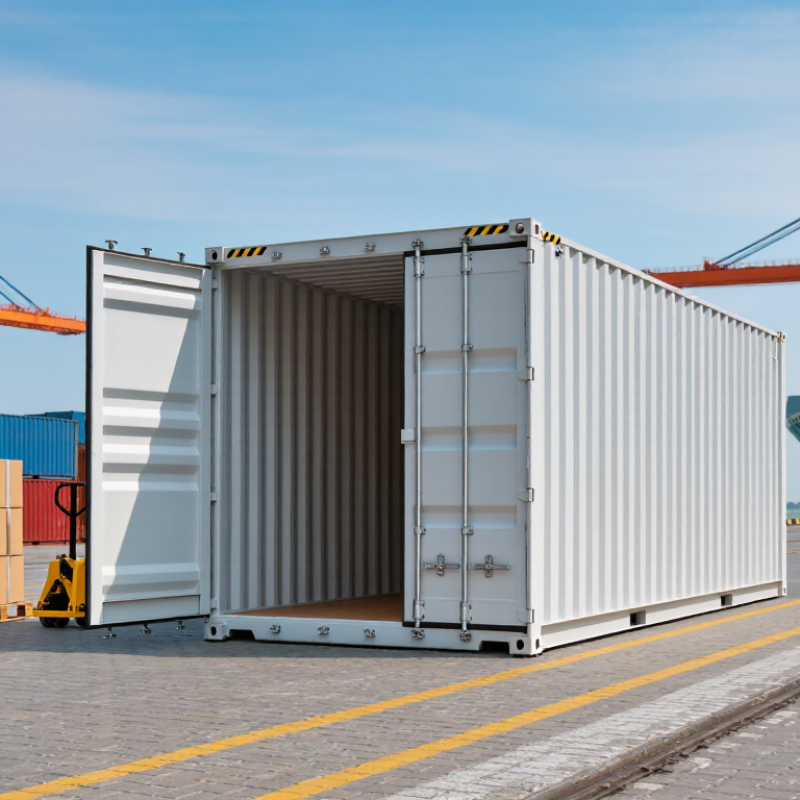
A 40ft High Cube container is a steel cargo unit designed for larger or taller shipments. It is 40 feet long, 8 feet wide, and approximately 9 feet 6 inches high externally. That extra foot of height distinguishes it from a standard 40ft container.
Inside, usable dimensions are usually close to 39 feet 5 inches long, 7 feet 8 inches wide, and 8 feet 9 inches high. Internal measurements can vary slightly by manufacturer and wall design. Its capacity is commonly around 76 cubic meters, although the permitted payload depends on the container’s rating, transport equipment, and local requirements. In practical work, the added height helps when loading stacked cartons, tall machinery, or bulky furniture. It does not automatically mean better efficiency. Poorly planned packing can leave empty space above the cargo.
Tips: Measure every item before booking. Check door height, floor load limits, and ventilation needs. Use a packing plan with clear weight distribution. A forklift may improve loading speed, but it cannot correct an unstable arrangement. Leave enough clearance for doors and securing equipment. Condensation is another concern, especially when goods face changing temperatures. Moisture absorbers or ventilation may help, but they are not universal solutions. I have found that small measurement errors can cause expensive delays, so confirm the supplier’s technical sheet before shipment. A high cube container offers valuable space, yet careful planning still matters more than its name.
How Its Extra Height Increases Storage Capacity
Why Choose a 40ft High Cube Container?
How Its Extra Height Increases Storage Capacity
A 40ft high cube container offers about one extra foot of height compared with a standard container. Its exterior height is usually 9 feet 6 inches, while internal clearance often reaches nearly 8 feet 10 inches. Dimensions vary slightly, so measurements should be confirmed before ordering.
That vertical space creates useful storage options. Tall shelving can hold another carton level without expanding the floor area. Pallets can be stacked more safely when product packaging allows it. Long items, upright equipment, and bulky furniture also gain valuable clearance. In practical warehouse planning, an extra foot can turn an awkward gap into usable capacity. It is not a magic solution.
The additional volume may increase storage capacity by roughly 12 to 13 percent, depending on the container design. However, capacity depends on loading discipline, not height alone. Heavy goods should stay low, with weight distributed across the floor. Leave clearance near the doors for safer access and inspection. A simple aisle may reduce the theoretical volume, but it can save considerable handling time. I have seen storage plans fail because every available space was filled. More height helps, though careless stacking can make retrieval difficult. Measure cartons, racks, and lifting equipment together before choosing this container.
Which Cargo Types Suit This Container Best?
Why Choose a 40ft High Cube Container?
A 40ft high cube container suits cargo that needs volume more than extreme weight capacity. ISO 668:2020 places its internal height near 2.70 metres, about 30 centimetres higher than a standard container. Its usable volume approaches 76 cubic metres, depending on construction and fittings. Space matters.
This extra height benefits flat-packed furniture, mattresses, textiles, retail displays, insulation, and lightweight machinery. It also helps palletized cartons with awkward stacking patterns. UNCTAD’s Review of Maritime Transport 2024 states that shipping carries over 80% of global merchandise trade by volume. Efficient cubic utilization therefore matters across international supply chains. Still, volume can mislead. Dense metal parts, stone products, and liquid-filled cargo may reach weight limits before using the available space. Road regulations and the container’s verified gross mass remain decisive.
Tips: Measure every carton, including packaging. Keep heavy units low and centered. Use rated restraints and protect cartons from roof condensation. A loading plan should show aisle clearance and axle distribution. Measure twice. In practice, shippers sometimes choose high cubes for extra height, then discover their cargo is too heavy or poorly stackable. That is a costly mistake. Check the tare weight, payload rating, destination limits, and loading equipment before booking. UNCTAD’s data supports containerization, but it does not remove the need for cargo-specific planning.
How to Compare Costs, Handling, and Transport Requirements
Why Choose a 40ft High Cube Container?
Comparing a 40ft high cube begins with usable space, not the advertised length. ISO 668 sets the external height at about 2.90 metres. Internal volume is usually close to 76 cubic metres, compared with roughly 67 cubic metres in a standard 40ft container. That extra height can hold taller cartons, furniture, or machinery frames without double-stacking. The difference matters when cargo is bulky but relatively light.
Cost calculations need more discipline. Ocean freight is often quoted by equipment type, route, season, and cargo weight. A high cube may cost slightly more to source or reposition, while its freight rate can match a standard 40ft unit. My first spreadsheet looked convincing, but it ignored terminal handling, chassis hire, storage, and local delivery surcharges. UNCTAD’s Review of Maritime Transport reports that more than 80% of global merchandise trade moves by sea, yet port delays still make schedules uncertain. Ask for separate origin, ocean, destination, and demurrage charges.
Transport limits can defeat the space advantage. A container’s maximum gross weight is commonly around 30,480 kilograms, but the road limit may be lower because of axle rules. The World Bank’s 2023 Logistics Performance Index also shows that customs, infrastructure, and delivery reliability vary widely between markets. Measure the cargo, including packaging, before booking. Check door clearance too. A 2.90-metre container can meet a low bridge, warehouse entrance, or lifting-area restriction. Small omissions become expensive.
Why Choose a 40ft High Cube Container?
Comparing internal capacity, handling characteristics, and transport requirements
| Container Type |
Approx. Internal Dimensions |
Handling Consideration |
Transport Requirement |
| 20ft Standard |
5.90 × 2.35 × 2.39 m |
Easier to handle in congested yards and smaller sites |
Requires a 20ft-compatible chassis |
| 40ft Standard |
12.03 × 2.35 × 2.39 m |
More cargo capacity, but needs a longer turning radius |
Requires a 40ft-compatible chassis and route clearance |
| 40ft High Cube |
12.03 × 2.35 × 2.69 m |
Extra vertical space for high-volume or tall cargo |
Check height limits, bridge clearances, chassis rating, and terminal access |
A 40ft High Cube container uses the same general footprint as a standard 40ft container but provides approximately 8.4 m³ more internal volume because of its additional height. This can reduce the number of containers needed for lightweight, bulky cargo. Before choosing it, compare equipment availability, inland haulage rates, loading-site access, road height restrictions, and the cargo’s weight distribution. Internal dimensions and payload limits can vary by container specification.
What Factors Should Guide Your Final Selection?
Why Choose a 40ft High Cube Container?
What Factors Should Guide Your Final Selection?
A 40ft high cube container adds roughly one foot of interior height. It suits tall machinery, stacked cartons, and storage plans needing vertical clearance. Yet extra volume is not always better. Measure every item, including pallets, doors, wrapping, and lifting space. A warehouse supervisor may gain useful capacity, but a narrow site can make placement difficult. Check internal dimensions, door openings, floor condition, and maximum payload before ordering. Dimensions vary slightly by manufacturer and equipment age. That detail is easy to miss.
Your decision should reflect transport, handling, climate, and intended service life. For ocean or road movement, confirm weight limits with the carrier and local authorities. A lightly loaded box may waste money, while an overloaded unit creates handling risks. Inspect corner posts, roof panels, locking bars, and wooden flooring for corrosion or damage. For long-term storage, consider ventilation, humidity control, drainage, and ground clearance. High cube height helps access, but it can increase wind exposure when empty. I have seen storage plans fail because delivery trucks could not reach the prepared pad. Site access matters as much as internal capacity. Maybe more.
Tips: Create a simple loading sketch before purchase. Mark each crate’s length, width, height, and weight. Leave clearance near the doors. Request recent inspection photos, specifications, and a written condition report. Compare total delivered cost, not only the unit price. If measurements remain uncertain, pause and recheck them. A small error can remove the expected advantage.