2026 Top Solar Light Tower Buying Guide for Global Buyers
Global demand for reliable, lower-emission lighting is reshaping temporary power equipment. IRENA’s Renewable Capacity Statistics 2024 reported 1,419 GW of global solar capacity by the end of 2023. Solar represented roughly three quarters of new renewable capacity added that year. This expansion does not automatically make every Solar Light Tower a wise purchase. Buyer requirements still depend on climate, work duration, transport access, and lighting standards.
This 2026 buying guide translates industry evidence into practical decisions for global buyers. It examines photovoltaic output, battery chemistry, charging time, mast height, illumination coverage, noise levels, and protection ratings. A remote road project may need overnight autonomy and fast deployment. A port or construction site may prioritize wind resistance, corrosion protection, and precise light distribution. Small details matter. A poorly sized battery can leave workers in darkness before dawn.
The guide also considers supplier credibility, warranty terms, spare-part availability, and documented testing. IRENA’s cost analysis shows that renewable technologies continue to become more competitive, but equipment performance varies widely between manufacturers. IEC standards, regional electrical requirements, and verified laboratory data should support every serious comparison. Marketing claims alone are not enough.
No specification sheet tells the whole story. Field conditions are rarely perfect. Dust reduces panel output, winter temperatures affect batteries, and uneven ground complicates setup. Buyers should request measured runtime data under realistic loads, not only ideal laboratory results. The best Solar Light Tower is not necessarily the brightest or cheapest model. It is the model that delivers safe, repeatable lighting where the work actually happens.
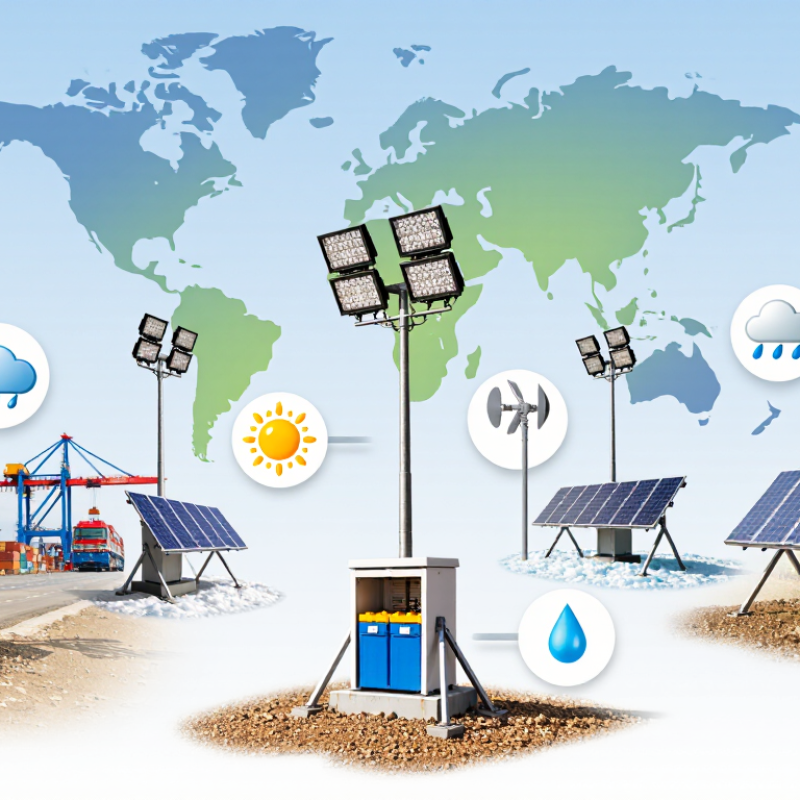
Solar Light Towers: Definition, Components, and Operating Principles
A solar light tower is a mobile lighting system that produces illumination without a permanent grid connection. It combines solar energy collection, battery storage, LED lighting, and a raised mast. Many units also include a trailer frame, stabilizing legs, a charge controller, and dusk-to-dawn sensors. The mast may extend several metres above ground, spreading light across work areas, roadsides, farms, or emergency sites.
During daylight, photovoltaic panels convert sunlight into direct current. A charge controller regulates that energy before it reaches the battery. After sunset, the controller releases stored power to high-efficiency LED fixtures. Some designs use direct-current lighting, while others include an inverter for auxiliary equipment. Runtime depends on panel size, battery capacity, lamp output, temperature, and cloud cover. A cold, overcast week can expose optimistic specifications.
Practical inspection matters. Check panel hinges, cable protection, wheel brakes, mast locks, and battery ventilation. Dust on panels can reduce charging, especially near construction sites. Lithium iron phosphate batteries often provide stable cycling, but their cold-weather performance still needs attention. Confirm ingress protection, operating temperature, replacement parts, and regional electrical requirements before purchasing. A lower wattage setting may provide longer overnight coverage. That trade-off is easy to overlook. No specification sheet predicts every night, so buyers should compare measured runtime data with their actual location, season, and lighting distance.
Key Applications and Benefits for Global Solar Light Tower Buyers
Solar light towers support construction sites, road repairs, emergency response, farms, ports, and temporary public events. They provide focused illumination where grid connections are unavailable or unreliable. Remote work crews can reposition a tower using a trailer, reducing dependence on fuel deliveries and fixed electrical infrastructure.
The IRENA Renewable Capacity Statistics 2024 report recorded 346 GW of new solar capacity worldwide in 2023. This growth reflects improving photovoltaic supply chains and wider technical acceptance. Solar light towers also avoid routine engine emissions during operation. That matters near hospitals, schools, protected areas, and residential communities. Quiet operation can improve night-shift communication. It can also reduce disturbance to nearby residents.
Performance depends on details.
The World Bank’s Off-Grid Solar Market Development report highlights growing demand for decentralized energy in underserved regions. Buyers should examine battery capacity, solar charging time, wind resistance, light coverage, and service access. A tower with high lumen output may still underperform under dust, shade, or winter conditions. I have seen specifications look impressive while practical coverage remained uneven. This is where field trials become valuable. Buyers should request measured runtime data, not only laboratory claims. Local climate records, transport limits, and replacement-part availability deserve equal attention. A slightly smaller tower may serve better when crews move it daily. Manufacturers and purchasers should document these assumptions before procurement.
How to Evaluate Solar Light Tower Performance and Technical Specifications
When evaluating a solar light tower, start with measurable output, not panel size. Ask for maintained illuminance in lux, beam coverage, LED efficacy, and lighting duration at the same time. A larger lamp may consume more energy without improving ground visibility. The U.S. Department of Energy’s Solid-State Lighting research reports that efficient LED systems can exceed 100 lumens per watt, but real performance also depends on optics, temperature, and battery voltage. Request an independent photometric report, preferably under LM-79 conditions.
Energy storage needs closer inspection. Compare usable battery capacity, not only nominal ampere-hours. Use local solar data and seasonal assumptions, because cloudy weeks can expose weak designs. The IEA PVPS Task 13 report identifies roughly 0.5% annual degradation as a common median for crystalline-silicon modules. That loss seems small. It still matters over a decade. Check whether the controller limits deep discharge and whether the battery has documented protection testing under IEC 62619. Also examine IP ratings, wind resistance, mast height, noise, charging time, and emergency lighting modes. A tower claiming 12 hours of autonomy may achieve it only at reduced brightness. That detail is often buried. Real sites are messier than datasheets. Test lux at the work surface, measure runtime overnight, and repeat the test after several cloudy days.
Installation, Maintenance, Safety, and Environmental Considerations
Choosing a solar light tower in 2026 requires more than comparing lumen ratings. Measure the work area, mounting height, soil condition, and winter sunlight before purchase. Place panels away from trees, cranes, and dusty exhaust paths. A small afternoon shadow can reduce charging noticeably. Install the mast on stable, level ground, then verify wind loading against local engineering requirements. Cable routes should avoid standing water and vehicle tracks. Use qualified personnel for electrical connections and grounding. Do not improvise anchors.
During commissioning, aim each lamp downward and away from roads, homes, and nearby habitats. This reduces glare and protects night-active wildlife. Check battery status, enclosure seals, bolts, and cable insulation every month. Clean panels with clean water and a non-abrasive cloth when dust forms. In cold or hot regions, record charging performance, because battery capacity changes with temperature. Test emergency shutoff controls and inspect the mast after severe weather. Keep pedestrians outside the lifting zone. Simple controls matter.
Choose durable components, repairable housings, and batteries with documented recycling routes. Efficient LEDs, motion dimming, and scheduled operation can reduce energy waste. Avoid placing towers where light spills into wetlands or dark rural corridors. Ask suppliers for test reports, warranty terms, and disposal guidance, not vague performance claims. A perfect site plan rarely exists. Recheck it after installation, because shadows, traffic, and seasonal weather may expose weak assumptions. That extra review can prevent poor illumination and premature replacement.
2026 Top Solar Light Tower Buying Guide for Global Buyers
Recommended annual maintenance frequency for solar light towers, based on common preventive-maintenance practices. Actual intervals should be adjusted for climate, dust, wind, operating hours, and local safety requirements.
Routine inspections help identify damaged cables, loose fasteners, reduced battery capacity, blocked solar panels, and lighting-performance issues before they affect site safety.
Global Purchasing Factors: Standards, Suppliers, Costs, and Logistics
For global buyers, a solar light tower is more than a lamp, panel, and battery. The real purchase begins with destination standards. Request test reports for electrical safety, electromagnetic compatibility, battery protection, and ingress rating. Requirements differ between regions, and a certificate accepted in one market may not satisfy another. Confirm local marking, documentation, and operating claims before paying a deposit. Ask an independent laboratory to review unclear documents. This step costs less than a rejected shipment.
Supplier selection needs evidence, not polished photographs. Audit production capacity, cell traceability, welding quality, software controls, and final inspection records. Order a sample and measure runtime after several cloudy days. Check mast stability, wheel brakes, charging behavior, light distribution, and noise. A written warranty should define battery capacity loss, replacement parts, response times, and exclusions. Do not ignore after-sales support. One lesson deserves attention: the cheapest sample can become the most expensive fleet.
Calculate landed cost, not factory price alone. Include tooling, testing, packaging, insurance, freight, duties, inland delivery, installation, and spare batteries. Compare Incoterms carefully, because responsibility changes at each handover. Solar towers are bulky, and damaged panels or bent masts create delays. Use reinforced packaging, moisture protection, shock indicators, and clear lifting points. For lithium batteries, verify transport classification and shipping documents with the carrier. Build a realistic buffer for customs inspections and seasonal port congestion. I would rather accept a longer lead time than promise an impossible delivery date.